

Part 1· ~1 min read
IntroductionThe Earth existed in emptiness and silence for billions of years. No creatures were walking around on it, hunting, making noises or eating. The only entities on the planet were bacteria and other single-celled…
The Real Origin of Life
The Earth existed in emptiness and silence for billions of years. No creatures were walking around on it, hunting, making noises or eating. The only entities on the planet were bacteria and other single-celled…
Part 1· ~1 min read
IntroductionThe Earth existed in emptiness and silence for billions of years. No creatures were walking around on it, hunting, making noises or eating. The only entities on the planet were bacteria and other single-celled…
Part 2· ~2 min read
Some Preserved FossilsThis section deals with the characteristics of life forms found in Cambrian strata dating back some 530 million years. Latin names are cited in order to provide general information, but the important thing is to…
Part 3· ~1 min read
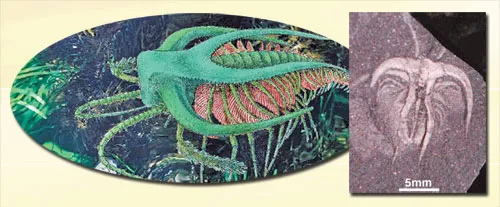
MarrellaMarrella , described as a “lace crab” by Charles Walcott, is one of the most abundant of Burgess Shale fossils. Some 15,000 specimens of Marrella have been collected from Walcott Quarry (named after Walcott) alone.…
Part 4· ~1 min read
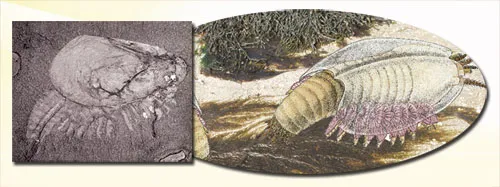
CanadaspisCanadaspis fossils have been preserved with nearly all their features. The animal’s carapace had two valves literally hinged together. The abdomen, thorax, and intestinal system are completely visible in the…
Part 5· ~1 min read
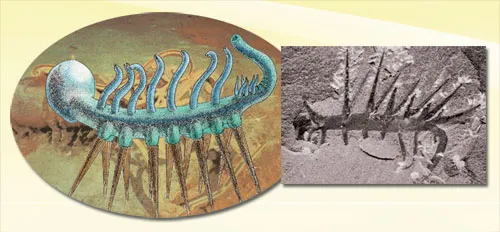
HallucigeniaThis creature’s spines make it one of the most interesting Shale Burgess fossils. There were tentacles in various parts of its body. It had spines on bulges on the dorsal side of its body. All these tentacles were…
Part 6· ~1 min read
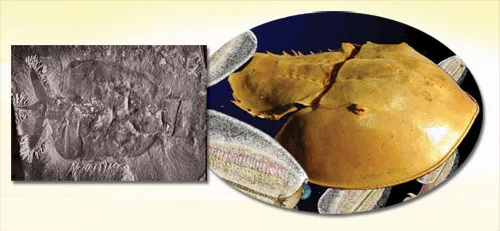
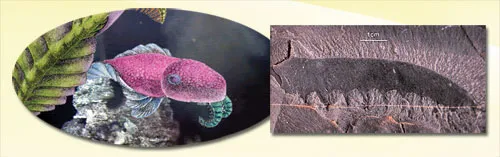
OdaraiaOdaraia ’s structures make it one of the most remarkable Burgess Shale life forms. It had two rather large eyes and two valves meeting along the ventral margin. As an appendage to the abdomen, it had three blades.…
Part 7· ~1 min read
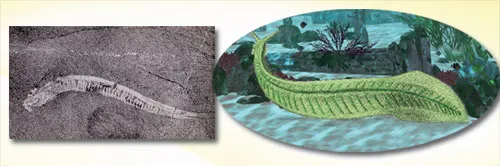
AnomalokaridAnomalocaris , one of the largest Burgess Shale animals, averages 45 to 60 centimeters (17 to 23 inches) in length, although it can sometimes be as long as 1 or even 2 meters (3 to 6.5 feet). Its mouth section…
Part 8· ~1 min read
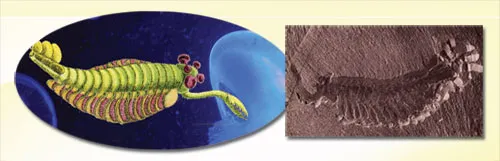
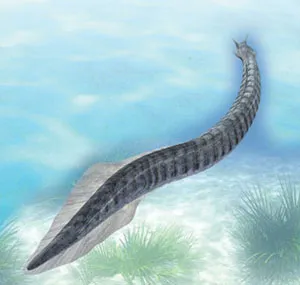
PikaiaPikaia was first described by Walcott as a marine worm. However, because of several of its features, it was included in the phylum Chordata , which also includes vertebrates. The first known Cambrian representative…
Part 9· ~1 min read
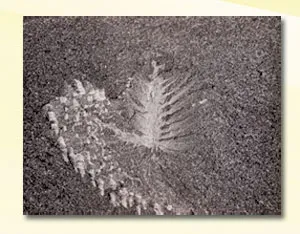
OpabiniaOpabinia is a creature found in the earliest Cambrian rock beds and possesses characteristics very different from other life forms. It had a segmented trunk and a soft shell. There were five eyes on its head. More…
Part 10· ~1 min read
InsolicoryphaThis single fossil specimen from the Burgess Shale formation has been astonishingly well preserved, despite being very tiny. The head part is divided into two sections; both these projections were used for sense…
Part 11· ~1 min read
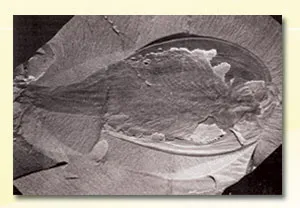
BranchiocarisBranchiocaris had a hard shell consisting of two parts, covering the anterior part of its body. The trunk consisted of 40 divisions. The various appendages on its body were large structures resembling flaps. It had…
Part 12· ~4 min read
The Vertebrates That Evolutionists Never Expected!Vertebrates are defined as organisms with a spinal column and spinal cord, a skeleton consisting of bone or cartilage, a brain protected inside a skull, a closed circulatory system and a heart consisting of two,…

Part 13· ~4 min read
The Fact Revealed by FossilsFor as long as they have been investigated, Cambrian rocks have continued to reveal the characteristics of brand new organisms, revealing important specimens that enriched the variety of life hitherto known to us and…
Part 14· ~4 min read
What Is a Complex System?A complex system arises from a large number of smaller components that are all interrelated to one another. At the same time, this system is in a constant exchange and interface with surrounding structures. The parts…
Part 15· ~2 min read
The First Complex Life FormsIn terms of Darwinian theory, the Cambrian Period is very early for the high level of biological complexity it exhibits. Darwinists claim that the complex structures possessed by living things are acquired gradually,…
Part 16· ~3 min read
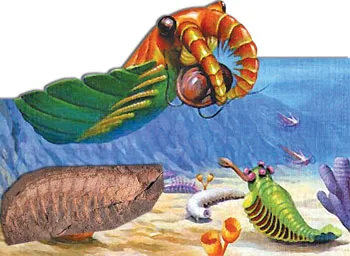
Cambrian Ecology and Suddenly Appearing PredatorsAmong the most striking features of Cambrian species are the advanced organs they possess for attack and defense, in complex prey-predator relationships. That Cambrian life forms were equipped with such advanced…
Part 17· ~4 min read
Genomic ComplexityThe anatomical variety that suddenly appeared in the Cambrian spells out an explosion of the information in the DNA of those living things. A single-celled eukaryote of the pre-Cambrian is an internally specialized…
Part 18· ~4 min read
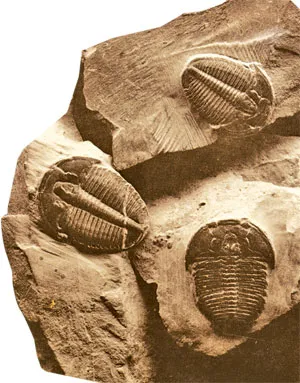
The Trilobite: A Flawless Cambrian Life FormStephen Jay Gould has described this as “everyone’s favourite invertebrate fossil,”. 101 because the trilobites were uniquely attractive creatures, the best preserved member of the marine arthropods, with a sculpted…
Part 19· ~6 min read
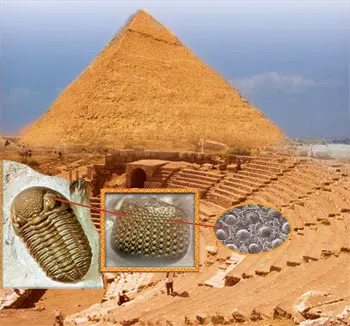
Amazing 530-Million-Year-Old EyesLarge or small, just about every animal swimming in the sea, flying in the air or living on the land has been equipped with eyes. It comes as no surprise that a tiny fly or a crab has eyes letting it perceive its…

Part 20· ~3 min read
The Superior Complexity in Phacops TrilobitesTrilobites of the genus Phacops have a large number of lenses. Rather than being hexagonal, the shape of these lenses is more reminiscent of a marble’s. If you gaze through a clear marble, you perceive an indistinct…
Part 21· ~1 min read
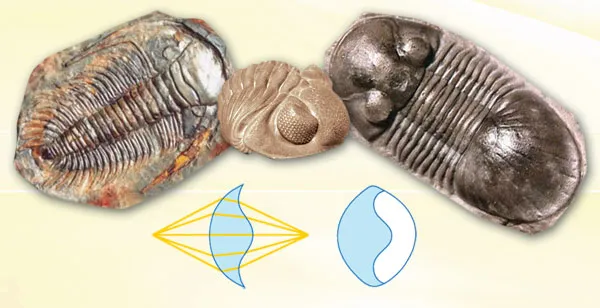
The Problem and Its SolutionA spherical lens like a marble does not produce a clear image, because the rays reaching its rounded surface must travel different distances, and are thus refracted at different angles. The trilobite eye overcomes…
Part 22· ~4 min read
Extraordinary SensitivityThe creation in the trilobite lens reveals an extraordinary sensitivity in terms of the calcite and chitin refractive indexes. ( Refractive index is a measure for how much the speed of light is reduced when passing…
Part 23· ~2 min read
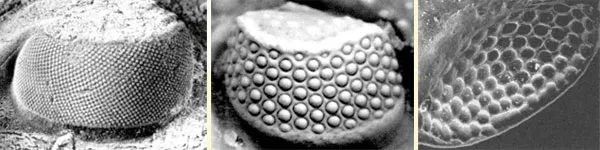
The Trilobite Eye Is a Marvel of CreationThe trilobite eye’s exceedingly complex structure exhibits the most perfect details. Its components are linked to one another with the most sensitive arrangements, which makes the eye a fully functioning whole. These…
Part 24· ~7 min read
Evolutionists Cannot Account for the TrilobiteThe compound eye structure that first appeared in trilobites, 530 million years ago, has remained unchanged and still exists in such arthropods as the dragonfly and the bee ever since. 120 This non-evolution…