Reading time: ~1 min read
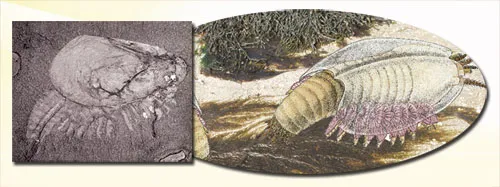
Canadaspis fossils have been preserved with nearly all their features. The animal’s carapace had two valves literally hinged together. The abdomen, thorax, and intestinal system are completely visible in the specimens. Canadaspis’s legs were divided into two branches. The inner branch was segmented and was used for walking. It ended in small curved claws. The flap-like outer gill branches extended forward of where the abdomen emerged from between the valves. These flap-like extensions were used for locomotion and also for exchanging oxygen. It is thought that it used its feet to dig in the mud in search of organic particles.73