

Reading time: ~4 min read
Fascism had its first successes in Italy. Mussolini took advantage of the social tensions and longing for change among the Italians, and after the war, mobilized former soldiers, the unemployed and university students, with slogans calling for a return of the glory days of ancient Rome. Mussolini organized his supporters, known as "Black Shirts," in a quasi-military format, and whose methods were founded on violence. They began to carry out attacks in the streets against groups they identified as their rivals. With their Roman greetings, songs, uniforms and official parades, they aroused the emotions of the uneducated and the disenfranchised.
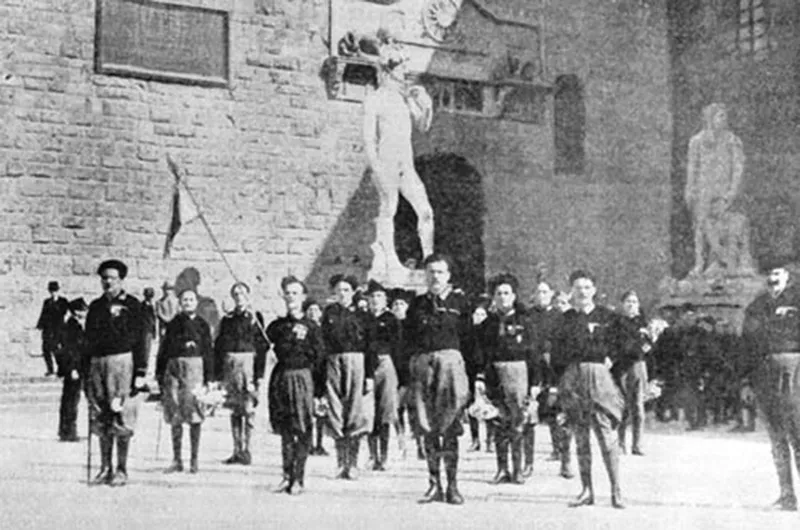
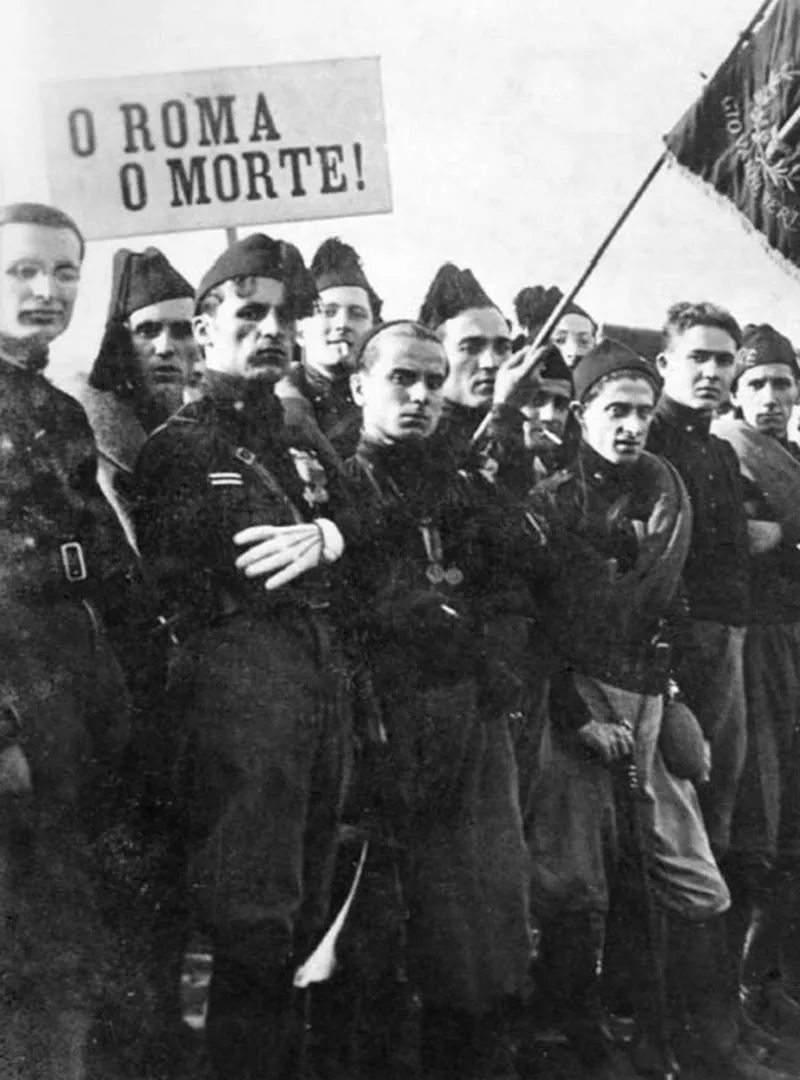
On October 29, 1922, 50,000 fascist militants under the command of six generals marched on Rome. Because the king knew what the force that opposed him was capable of, and that there was no way he could oppose them, he called on Mussolini to form a government. As a result of the developments that followed, the Italian fascists finally came to power. A while later, Mussolini banned all other political parties. Some of the opposition leaders were sent into exile abroad, and others were imprisoned.
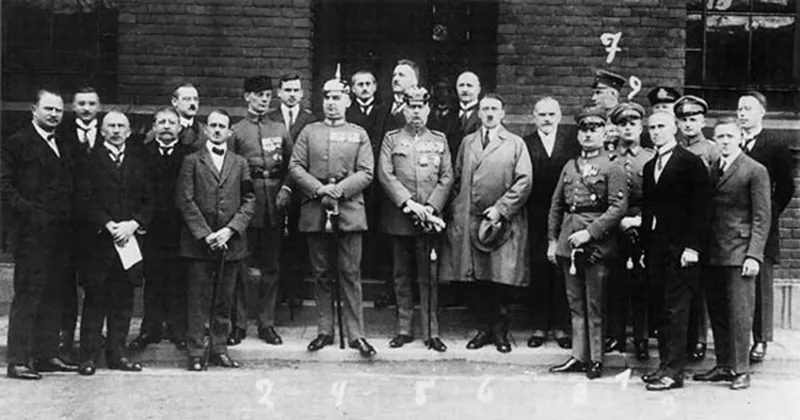
Hitler came to power by similar methods. The Nazi movement was born in the early 1920s, and carried out its first violent act in the Munich Beer Hall putsch. On November 8, 1923, Hitler raided a meeting at the Munich City Beer hall where Bavarian State Commissioner Gustav von Kahr was speaking with military units, no different from an organized gang, and 600 SA troopers. Hitler entered the meeting in a great rage and occupied the premises. Firing at the ceiling, he said that he was announcing a national revolution. But this coup was a failure. Hitler was arrested and lived as an exile for nine months. Nonetheless, in later years, the Nazis grew stronger by terrorizing their opponents and inciting anti-Semitic hatreds. Eventually, the Nazi Party became an important party in parliament. Throughout all this, of course, the Nazis frequently resorted to illegal methods, much like the Italian Fascist party. On January 30, 1933, Hitler was made chancellor. The post was conferred upon him by the elderly President Hindenburg, who was aware that the growing power of the national Socialist Movement was increasingly menacing, and therefore, made Hitler chancellor in order to avert a civil war. When Hitler again ran for election in March, like all fascist administrations, the Nazis employed terror, intimidation, and deception. After the elections, the German parliament immediately passed the Enabling Act, which made Hitler dictator of Germany for four years.
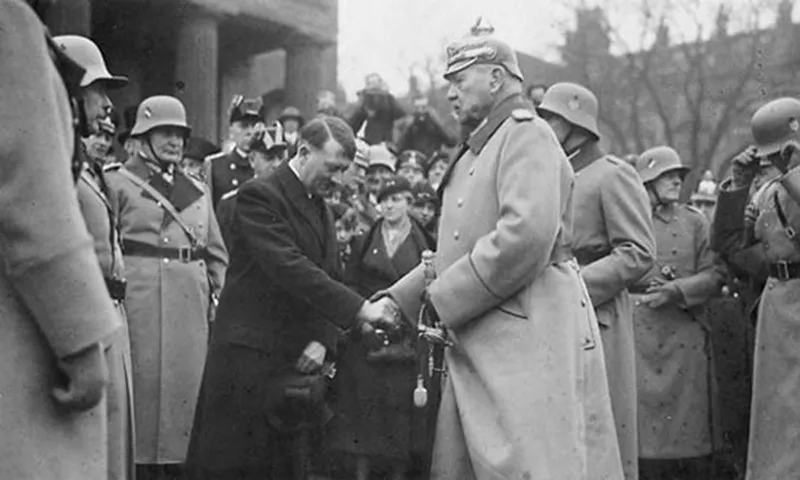
In this manner, the administrative and law-making power came into Hitler's hands. But, shortly thereafter, the extent of his powers was increased still further. In August 1934, at the death of Hindenburg, the offices of president and chancellor were joined together, with Hitler assuming them both. Hitler followed policies much like those of Mussolini. In addition to brute force, Hitler also made use of various types of anti-democratic methods. For instance, he banned all opposition parties, and outlawed trade unions, thereby completely eliminating personal freedoms. Nazi influence was felt in all walks of life. Even university professors were required to take an oath of loyalty to Hitler.
In Spain, Franco came to power in the aftermath of a bloody civil war. Supported by Hitler and Mussolini, Franco's army defeated the communists after a long and fierce war, and took power over the entire country. Franco then set up a particularly oppressive regime, and ruled the country with an "iron fist" until 1975.