

Reading time: ~5 min read
Variation, a term used in genetics, refers to a genetic event that causes the individuals or groups of a certain type or species to possess different characteristics from one another. For example, all the people on earth carry basically the same genetic information, yet some have slanted eyes, some have red hair, some have long noses, and others are short of stature, all depending on the extent of the variation potential of this genetic information.
Evolutionists predicate the variations within a species as evidence to the theory. However, variation does not constitute evidence for evolution because variations are but the outcomes of different combinations of already existing genetic information and they do not add any new characteristic to the genetic information. The important thing for the theory of evolution, however, is the question of how brand-new information to make a brand-new species could come about.
Variation always takes place within the limits of genetic information. In the science of genetics, this limit is called the "gene pool". All of the characteristics present in the gene pool of a species may come to light in various ways due to variation. For example, as a result of variation, varieties that have relatively longer tails or shorter legs may appear in a certain species of reptile, since information for both long-legged and short-legged forms may exist in the gene pool that species. However, variations do not transform reptiles into birds by adding wings or feathers to them, or by changing their metabolism. Such a change requires an increase in the genetic information of the living thing, which is certainly not possible through variations.
Darwin was not aware of this fact when he formulated his theory. He thought that there was no limit to variations. In an article he wrote in 1844 he stated: "That a limit to variation does exist in nature is assumed by most authors, though I am unable to discover a single fact on which this belief is grounded".143
In The Origin of Species he cited different examples of variations as the most important evidence for his theory.
For instance, according to Darwin, animal breeders who mated different varieties of cattle in order to bring about new varieties that produced more milk, were ultimately going to transform them into a different species. Darwin's notion of "unlimited variation" is best seen in the following sentence from The Origin of Species:
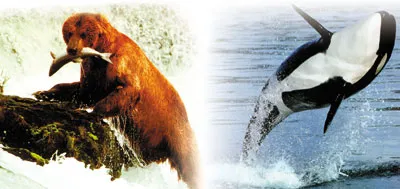
I can see no difficulty in a race of bears being rendered, by natural selection, more and more aquatic in their habits, with larger and larger mouths, till a creature was produced as monstrous as a whale.144
The reason Darwin cited such a far-fetched example was the primitive understanding of science in his day. Since then, in the 20th century, science has posited the principle of "genetic stability" (genetic homeostasis), based on the results of experiments conducted on living things. This principle holds that, since all mating attempts carried out to produce new variations have been inconclusive, there are strict barriers among different species of living things. This meant that it was absolutely impossible for animal breeders to convert cattle into a different species by mating different variations of them, as Darwin had postulated.
Norman Macbeth, who disproved Darwinism in his book Darwin Retried, states:
The heart of the problem is whether living things do indeed vary to an unlimited extent... The species look stable. We have all heard of disappointed breeders who carried their work to a certain point only to see the animals or plants revert to where they had started. Despite strenuous efforts for two or three centuries, it has never been possible to produce a blue rose or a black tulip.145
Luther Burbank, considered the most competent breeder of all time, expressed this fact when he said, "there are limits to the development possible, and these limits follow a law."146
The Danish scientist W. L. Johannsen sums the matter up this way:
The variations upon which Darwin and Wallace had placed their emphasis cannot be selectively pushed beyond a certain point, that such a variability does not contain the secret of 'indefinite departure.147
In the same way, the different finches that Darwin saw on the Galapagos Islands are another example of variation that is no evidence for "evolution". Recent observations have revealed that the finches did not undergo an unlimited variation as Darwin's theory presupposed. Moreover, most of the different types of finches which Darwin thought represented 14 distinct species actually mated with one another, which means that they were variations that belonged to the same species. Scientific observation shows that the finch beaks, which have been mythicized in almost all evolutionist sources, are in fact an example of "variation"; therefore, they do not constitute evidence for the theory of evolution. For example, Peter and Rosemary Grant, who spent years observing the finch varieties in the Galapagos Islands looking for evidence for Darwinistic evolution, were forced to conclude that no "evolution" that leads to the emergence of new traits ever takes place there.148