

Reading time: ~4 min read
There are a number of homologous organs shared by different groups among which evolutionists cannot establish any kind of evolutionary relationship. Wings are one example. In addition to birds, we find wings on bats, which are mammals, and on insects and even on some dinosaurs, which are extinct reptiles. Not even evolutionists posit an evolutionary relationship or kinship among those four different groups of animals.
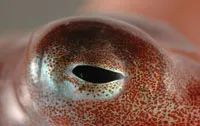
Another striking example is the amazing resemblance and the structural similarity observed in the eyes of different creatures. For example, the octopus and man are two extremely different species, between which no evolutionary relationship is likely even to be proposed, yet the eyes of both are very much alike in terms of their structure and function. Not even evolutionists try to account for the similarity of the eyes of the octopus and man by positing a common ancestor. These and numerous other examples show that the evolutionist claim based on resemblances is completely unscientific.
In fact, homologous organs should be a great embarrassment for evolutionists. The famous evolutionist Frank Salisbury's confessions revealed in his statements on how extremely different creatures came to have very similar eyes underscores the impasse of homology:
Even something as complex as the eye has appeared several times; for example, in the squid, the vertebrates, and the arthropods. It's bad enough accounting for the origin of such things once, but the thought of producing them several times according to the modern synthetic theory makes my head swim.158
There are many creatures which, despite their very similar physical make-up, do not permit any claims of evolutionary relationship. Two large mammal categories, placentals and marsupials, are an example. Evolutionists consider this distinction to have come about when mammals first appeared, and that each group lived its own evolutionary history totally independent of the other. But it is interesting that there are "pairs" in placentals and marsupials which are nearly the same. The American biologists Dean Kenyon and Percival Davis make the following comment:
According to Darwinian theory, the pattern for wolves, cats, squirrels, ground hogs, anteaters, moles, and mice each evolved twice: once in placental mammals and again, totally independently, in marsupials. This amounts to the astonishing claim that a random, undirected process of mutation and natural selection somehow hit upon identical features several times in widely separated organisms.159

Extraordinary resemblances and similar organs like these, which evolutionist biologists cannot accept as examples of "homology," show that there is no evidence for the thesis of evolution from a common ancestor. What, in that case, could be the scientific explanation of the similar structures in living things? The answer to that question was given before Darwin's theory of evolution came to dominate the world of science. Scientists like Carl Linnaeus, who first systematized living things according to their similar structures, and Richard Owen regarded these structures as examples of “common” creation. In other words, similar organs (or, nowadays, similar genes) are held to be so because they were created to serve a particular purpose, not because they evolved by chance from a common ancestor.
Modern scientific findings show that the claim of a "common ancestor" made with regard to similar organs is incorrect, and that the only possible explanation is common creation, confirming once again that living things were created by Allah.