

Reading time: ~3 min read
Mussolini was born in a small village in 1883. His father was an avowed Marxist, an ideology he passed on to his son. According to the Oxford historian Denis Mack Smith, in his book Mussolini, "his father used to read parts of Das Kapital to the family."114
Mussolini received a communist education from his father, and was known at school as a difficult and aggressive boy, and a smart-aleck. He had almost no friends.
In his 20s Mussolini became a fanatical communist, supporting anarchism, an even more radical and fanatical revolutionary ideology than communism. Denis Mack Smith writes:
By 1903 he was calling himself an 'authoritarian communist'. From his father he had learnt to have little patience with sentimental, reformist socialism or with democratic and parliamentary methods; instead he preached revolution to expropriate a ruling class that would never voluntarily renounce power and possessions. Parliament should be abolished; class struggle must replace class collaboration; private property should disappear altogether. Socialists should never collaborate with bourgeois governments and never pursue a policy of strikes merely to get better wages, but should be ready to use terrorism and mob violence to affect a wholesale social revolution.115
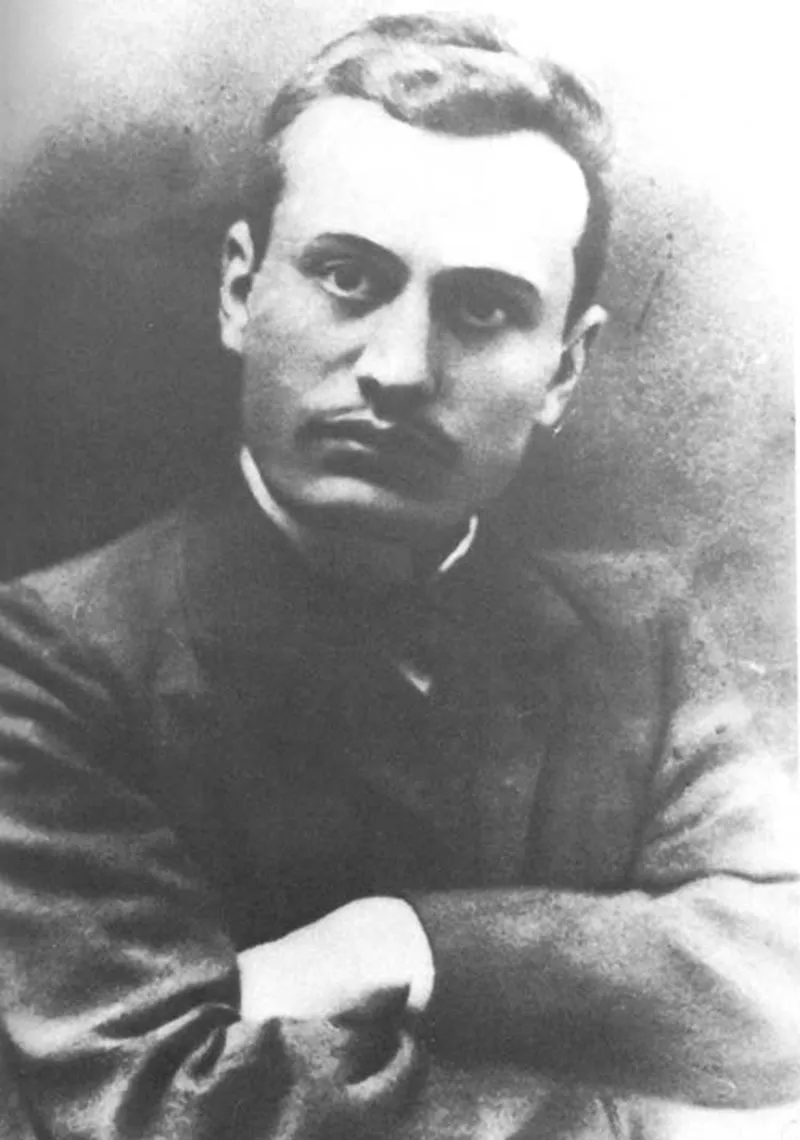
As we have seen, in his youth Mussolini was a fanatical communist. The model of "revolution by violence and terror" closely resembled the terrorist methods of Lenin, which he would put into practice in Russia later on. Actually, Mussolini had established a relationship with Lenin during those years. According to his own later account, he met Lenin, who was in Switzerland at that time, and even won his approval.116 Mussolini emphasized his loyalty to Marxism by saying, "Marx was the greatest of all theorists of socialism" and frequently quoted from Marx in his writings.117
One of the defining characteristics of the communist Mussolini was a fanatical hatred of religion. Denis Mack Smith has this to say on the subject:
From his father he had learnt to be a thoroughgoing anti-clerical. He proclaimed himself to be an atheist...He forcibly denounced those socialists who thought religion a matter for individual conscience... Christianity in particular [he said] was vitiated by preaching the senseless virtues of resignation and cowardice, whereas the new socialist morality should celebrate violence and rebellion.118
It is important to make a careful estimation of Mussolini's state of mind as set out here. As we have seen, he revealed his hatred of and total lack of belief in God with open declaration of untruth about Him. As we shall soon see, Mussolini felt the need to support the Church the entire time he was in power, and so, sometimes portrayed himself as a religious man.
Furthermore, even during the years of his fanatical communism, he tried to wear a mask of religion. While he produced fanatically anti-religious writings and speeches in his own country, he invented a story about the depth and firmness of his religious beliefs when writing for an Anglo-Saxon audience.119
Mussolini's hatred of religion and his communist militancy lasted throughout the 1910s. In 1908, he wrote for the communist magazine La Lima under a false name, and thus clashed with the weekly Il Giornale Ligure, the publishing organ of the Catholics of Oneglia. The interesting thing is that after Mussolini came to power, the collection of La Lima in the local library disappeared mysteriously, because, after he came to power, he decided to use religion for political ends, and concealed his true face, his hatred of religion.120