


Part 1· ~1 min read
IntroductionIn the December 2002 edition of Scientific American magazine, an article under the headline "Food for Thought," by William R. Leonard, appeared which spoke of man's being a so-called evolved species of animal and…
Claims and Answers
In the December 2002 edition of Scientific American magazine, an article under the headline "Food for Thought," by William R. Leonard, appeared which spoke of man's being a so-called evolved species of animal and…
Part 1· ~1 min read
IntroductionIn the December 2002 edition of Scientific American magazine, an article under the headline "Food for Thought," by William R. Leonard, appeared which spoke of man's being a so-called evolved species of animal and…
Part 2· ~1 min read
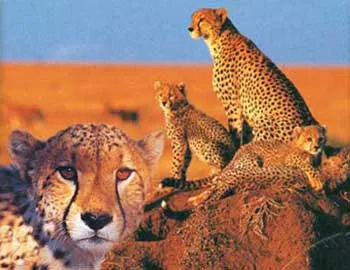
The Claim That Nutrition Played an Evolutionary Role is FictitiousThe claim is put forward in the Scientific American article that "our ancestors'" progress in increasing the energy obtained from food and raising its nutritional quality was one of the main features in mankind's…
Part 3· ~2 min read
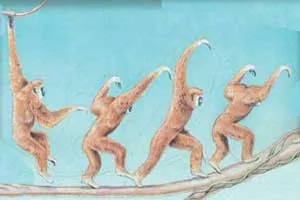
The Transition to Bipedalism is an Imaginary ScenarioThe article describes how apes' quadrupedal locomotion supposedly gradually changed into bipedal locomotion, and then considers the conditions that might have caused this so-called change. The best-known of the…
Part 4· ~1 min read
Chimpanzees Which Walk on Two Legs Invalidate the Evolutionists' ClaimsAs well as this research into Australopithecus , there is another discovery which has overturned the claim that walking on two legs was an evolutionary phase. Certain apes in our own time are capable of walking…
Part 5· ~1 min read
Bipedalism and Other Humanoid Characteristics: A Morass of Prejudice and SpeculationScientific American contains considerable speculation regarding the advantages that an adaptation such as walking on two legs might have brought with it. Yet, for some reason, this claim consists of speculation…
Part 6· ~1 min read
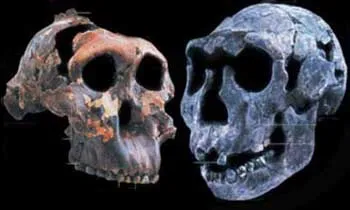
A Deceptive IllustrationIn one of the photographs published by Scientific American , skulls belonging to Homo erectus and the species Australopithecus boisei are compared. The anatomical differences between the two are then put down to…