

Part 1· ~1 min read
Schindewolf, OttoOtto Schindewolf, a European paleontologist, is known for the “Hopeful Monster” theory he proposed in the 1930s. 208 ( See The Hopeful Monster Fantasy .)
Claims and Answers
Otto Schindewolf, a European paleontologist, is known for the “Hopeful Monster” theory he proposed in the 1930s. 208 ( See The Hopeful Monster Fantasy .)
Part 1· ~1 min read
Schindewolf, OttoOtto Schindewolf, a European paleontologist, is known for the “Hopeful Monster” theory he proposed in the 1930s. 208 ( See The Hopeful Monster Fantasy .)
Part 2· ~5 min read
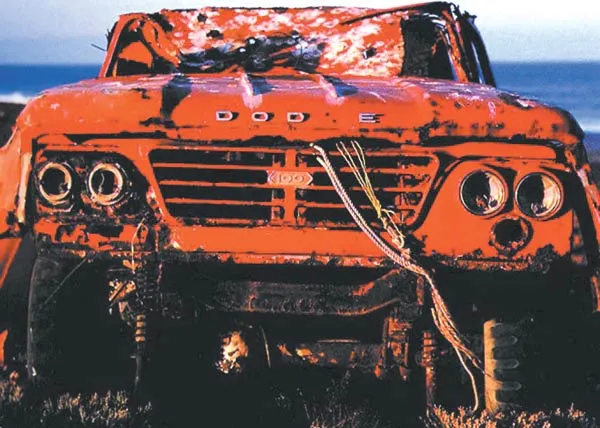
Second Law of Thermodynamics (The Law of Entropy)The Second Law of Thermodynamics states that left to themselves and abandoned to natural conditions, all systems in the universe will move towards irregularity, disorder and corruption in direct relation to the…
Part 3· ~3 min read
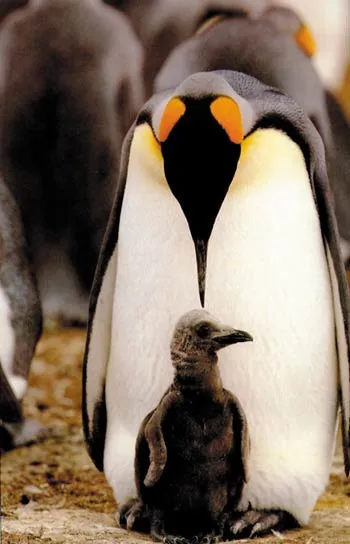
“Selfish Gene” Theory, TheThe altruistic behavior seen in living things cannot be explained by evolutionists. (See Altruism .) For example, male and female penguins defend their offspring literally to the death. The male penguin keeps its…
Part 4· ~2 min read
Self-Ordering Error, TheEvolutionist claims and concepts are generally employed in a deceptive manner. One of these misrepresentations is the deliberate confusion of the concepts of “ordered” and “organized.”
Part 5· ~2 min read
“Self-Organization” Nonsense, TheEvolutionists use the concept of self-organization to claim that inanimate matter can so organize itself as to produce a living entity. This belief flagrantly ignores all experiments and observations that have shown…
Part 6· ~1 min read
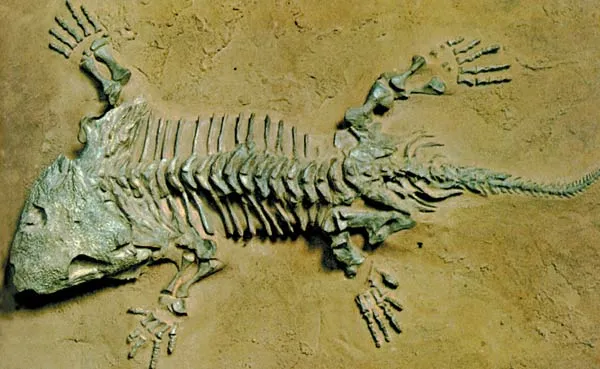
SeymouriaThe creature that was long proposed as the ancestor of reptiles was the extinct amphibian species Seymouria . However, it then emerged that Seymouria could not be an intermediate form, since reptiles were living on…
Part 7· ~1 min read
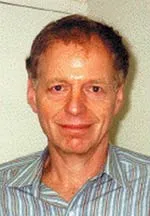
Shapiro, RobertRobert Shapiro, a New York University professor of chemistry and DNA expert, calculated the probability of the 2,000 types of proteins in a simple bacterium coming into existence by chance. (The human cell contains…
Part 8· ~1 min read
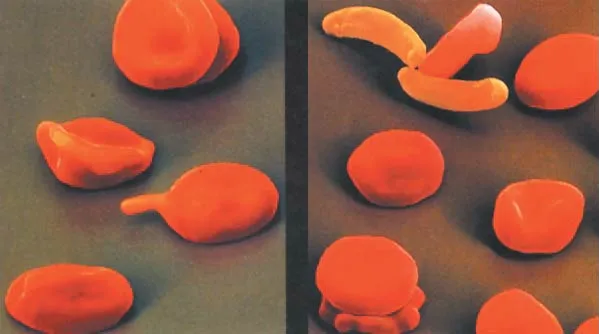
Sickle Cell AnemiaThe sole example of a “useful mutation” that evolutionist biologists refer to is the disease sickle cell anemia, in which the hemoglobin molecule responsible for transporting oxygen becomes deformed and changes…
Part 9· ~2 min read
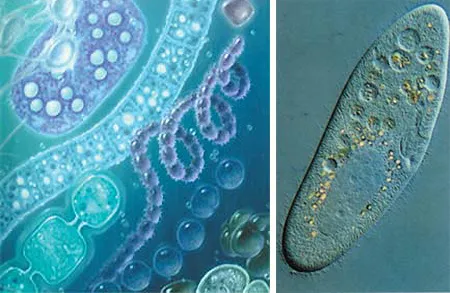
Single Cell to Multi-Cell Transition Myth, TheAccording to the evolutionist scenario, primitive single-celled organisms that came into existence by chance were the original ancestors of all living things. Over the course of time, these organisms that formed…
Part 10· ~5 min read
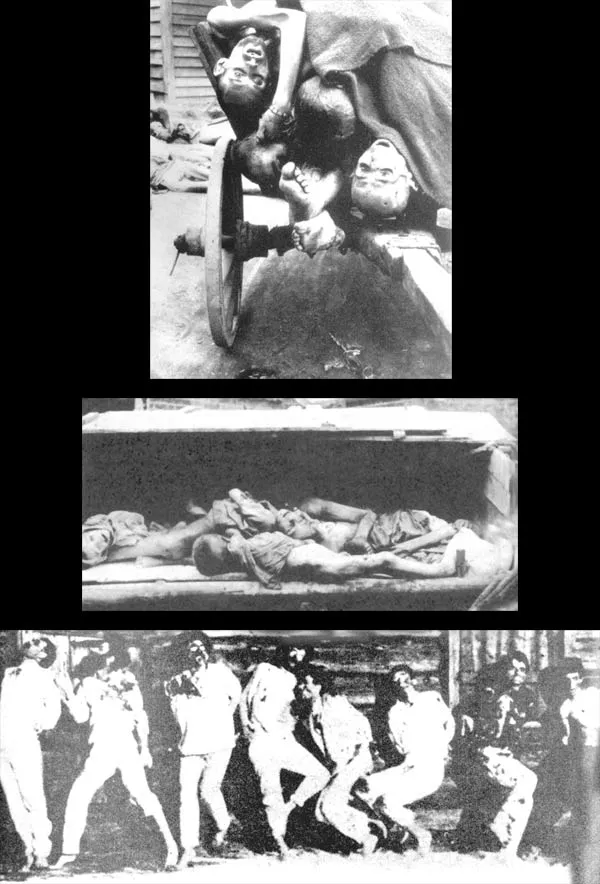
Social DarwinismOne of the theory of evolution’s most basic claims is that the development of living things is based on a struggle for survival. According to Darwin, there was a ruthless eternal conflict in nature. The strong always…
Part 12· ~1 min read
Spencer, HerbertHerbert Spencer was the main theoretician of Social Darwinism, who adapted Darwin’s principles to the life of society. He wrote that if someone was poor, that was his own fault: No one should help anyone else to…
Part 14· ~1 min read
StasisThe fossil record shows that living species emerged in a single moment with all their different structures fully formed, and that they remained unchanged over very long geological periods of time.
Part 15· ~2 min read
Struggle For Survival, TheThe fundamental assumption of the theory of natural selection is that every living thing thinks only of itself in the struggle to the death. In proposing this idea, Darwin was influenced by the theories of Thomas…