

Reading time: ~2 min read
Many of the organs that appeared in Cambrian life forms, such as eyes, antennae, limbs, mouth and gut are all complex systems that exhibit a number of basic features.
A complex system can be summarized as follows:
A complex system arises from a large number of smaller components that are all interrelated to one another. At the same time, this system is in a constant exchange and interface with surrounding structures. It is not enough for a single component to be operating in order for the complex system to function. All of its components need to work together at the same time, in harmony, and in a flawless manner.
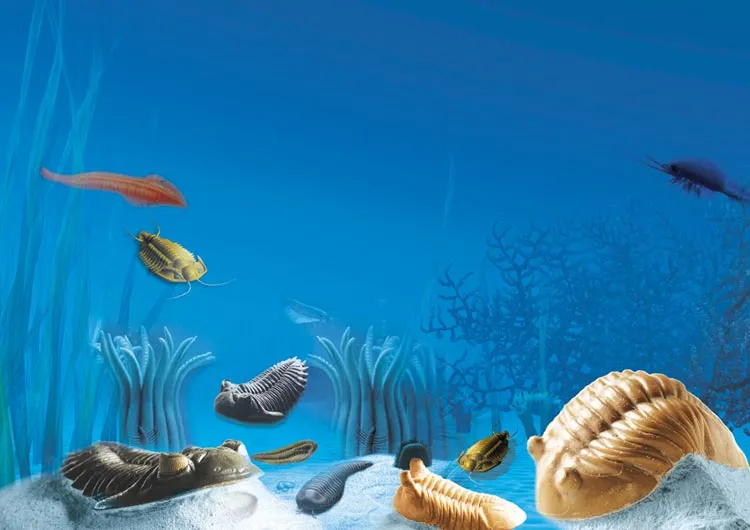
The eye is an example of one such complex structure, consisting of a large number of components, each of which is linked to other equally complex structures. Individually, the substructures of the eye cannot make vision possible. In order for the eye to see, all the components have to perform their own individual functions together, and flawlessly.
The complexity encapsulated within any single eye manifests itself similarly in a single cell of a living thing, or even at the fundamental level of a single protein within that cell. This interrelated sophistication is the greatest obstacle facing the Darwinist claim of “small, random changes” as an explanation for the development of species. As we know, random effects are almost always destructive. Any random mutation affecting a complex system will cause the collapse of that system, even if it affects only one of its components. Therefore, a mutation in the optic nerve will cause blindness in the eye.
Excessive current—as in a power surge—will cause damage to a radio. No one can imagine that a power surge could turn that radio into a television. Therefore, any random effect impacting on the eye, a structure far more complex than any radio, will inevitably damage it. With their complex structures, the Cambrian Period life forms we shall be looking at in this chapter expose the invalidity of the claims of evolution and show that these life forms were created.