

Reading time: ~3 min read
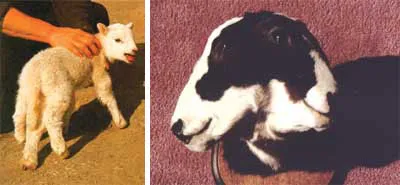
As you have just seen, the punctuated model of evolution hypothesizes that the mutations leading to speciation take place on a very large scale or that some individual species are exposed to a succession of serial mutations. However, that assumption contradicts all the observational data from genetic science.
R. A. Fisher, one of the century's best-known geneticists, established a rule, based on experiment and observation, that invalidates this hypothesis. In his book The Genetical Theory of Natural Selection, Fisher reports that any mutation's ability to survive in a population is inversely proportional to its effect on the phenotype.42 To put it another way, the greater a mutation is, the lower will be its chances of remaining permanent in a community.
The reason for this is not hard to see. Mutations represent random changes in a living thing's genetic data. They never have the effect of improving that genetic information. On the contrary, mutated individuals always suffer serious diseases and disabilities. Therefore, the more any individual is affected by mutation, the lower its chances of survival.
The Harvard University evolutionary biologist Ernst Mayr, one of Darwinism's most passionate advocates, makes the following comment:
The occurrence of genetic monstrosities by mutation ... is well substantiated, but they are such evident freaks that these monsters can be designated only as "hopeless." They are so utterly unbalanced that they would not have the slightest chance of escaping elimination through stabilizing selection ... the more drastically a mutation affects the phenotype, the more likely it is to reduce fitness. To believe that such a drastic mutation would produce a viable new type, capable of occupying a new adaptive zone, is equivalent to believing in miracles ... The finding of a suitable mate for the "hopeless monster" and the establishment of reproductive isolation from the normal members of the parental population seem to me insurmountable difficulties.43

Obviously, mutations do not give rise to evolutionary development—which poses an insurmountable obstacle for the punctuated theory of evolution. Since mutation is destructive, the living undergoing macro-mutations that the proponents of evolution propose will suffer "macro"-destructive effects. Some evolutionists put their trust in mutations occurring in the regulatory genes in DNA. But the destructive effect that applies in regard to other mutations also applies here. The problem is that mutation is a random change, and any random change in any structure as complex as genetic information will have damaging consequences.
In their book The Natural Limits to Genetic Change, geneticist Lane Lester and population geneticist Raymond Bohlin describe the mutation dilemma in question:
The overall factor that has come up again and again is that mutation remains the ultimate source of all genetic variation in any evolutionary model. Being unsatisfied with the prospects of accumulating small point mutations, many are turning to macromutations to explain the origin of evolutionary novelties. Goldschmidt's hopeful monsters have indeed returned. However, though macromutations of many varieties produce drastic changes, the vast majority will be incapable of survival, let alone show the marks of increasing complexity. If structural gene mutations are inadequate because of their inability to produce significant enough changes, then regulatory and developmental mutations appear even less useful because of the greater likelihood of nonadaptive or even destructive consequences ... But one thing seems certain: at present, the thesis that mutations, whether great or small, are capable of producing limitless biological change is more an article of faith than fact.44
Observation and experiment show that mutations may alter, but do not improve on, genetic information and that they do damage living things. It is obviously inconsistent for the proponents of punctuated evolution to expect any "success" from them.