

Reading time: ~8 min read
Those who came after Darwin made enormous efforts to detect in the fossil record examples of the slow and gradual evolution that he foresaw. Darwin had ascribed their absence to the "insufficiency of the fossil record." The fossil record—which, in fact, provided a broad range of specimens even in his own day and shows the existence of all complex life forms as early as the Cambrian Explosion—continued to be the subject of research by evolutionists hoping to discover a miracle. Their objective was to prove Darwin correct, to demonstrate that the fossil record in his time truly was insufficient, and to find examples of intermediate forms, evidence that living things did undergo evolution.
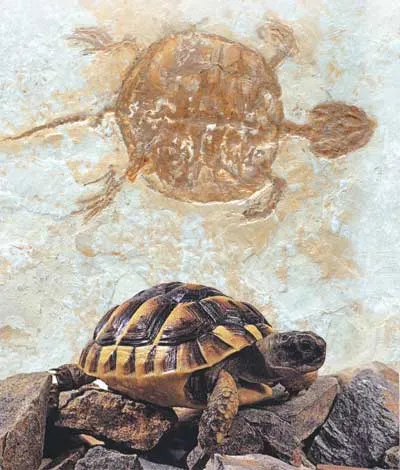
Yet the fossil record constantly produced results at variance with Darwin's expectations. Practically the entire globe was scoured, and the new fossils excavated were no longer "insufficient." Darwin had been wrong when he said that he believed that those who came after him would eventually find the intermediate forms that he expected. The fossil record produced not one single intermediate-form specimen. Instead, it revealed the fact that countless living things had undergone no evolution at all, had remained unchanged for many millions of years, together with all their many complex structures. The fossil record refuted Darwin. The lack of intermediate forms and the fact of stasis very definitely constituted no evidence for gradual evolution.
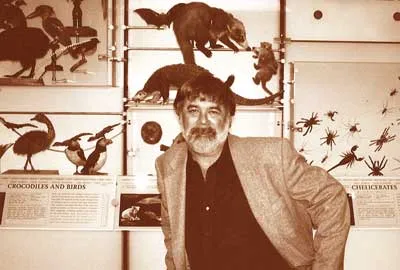
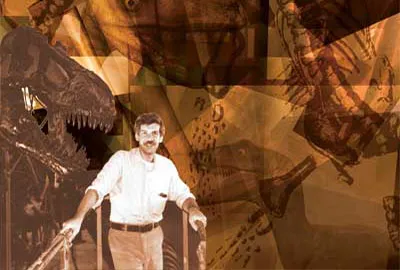
Some evolutionists clearly saw and admitted that Darwin's model of gradual evolution was untenable in the face of the reality of stasis. They then proposed that evolution "operated in a different way." In 1970, the Harvard University paleontologist Stephen Jay Gould and Niles Eldredge of the American Museum of Natural History developed an alternative theory, known as "punctuated evolution," which they published in 1972. Their sole aim was to account for the stasis phenomenon.
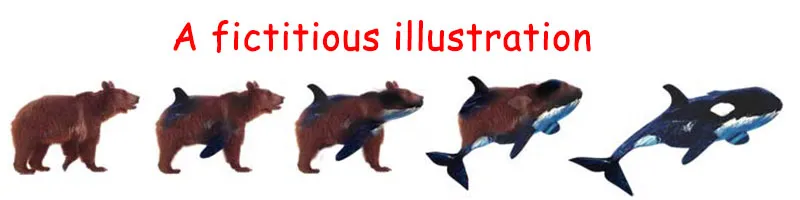
In fact, this theory was an adaptation of the "Hopeful Monster" theory put forward in the 1930s by the European paleontologist Otto Schindewolf. He had suggested that living things evolved as the result of sudden, dramatic mutations rather than the gradual accumulation of small ones. In citing a hypothetical example of his theory, Schindewolf suggested that the first bird in history had emerged from a reptile egg, through a "gross mutation," in other words, an enormous, though random change in its genetic structure.34 According to that same theory, some terrestrial mammals might suddenly have turned into whales through a sudden and comprehensive alteration.
These claims violate all known laws of genetics, biophysics and biochemistry, and were no more scientific than the fairy tale about a frog turning into a handsome prince. Still, this "Hopeful Monster" theory of Schindewolf's was adopted and defended in the 1940s by the University of California, Berkeley geneticist Richard Goldschmidt. But the theory was so inconsistent that it was soon abandoned.
The impetus that obliged Gould and Eldredge to take up this theory again was, as we have already seen, the lack of any "intermediate form" in the fossil record. Both the "stasis" and "sudden appearance" in the record were so obvious that these two were forced to reconsider the "Hopeful Monster" theory in order to account for this state of affairs. Gould's well-known article "The Return of Hopeful Monsters" was an expression of this forced about-turn. 35
Naturally, Eldredge and Gould did not repeat Schindewolf's theory word for word. In order to give it a more "scientific" nature, they sought to develop some kind of mechanism for the "sudden evolutionary leap" they proposed. (The interesting term "punctuated equilibrium" which they gave to their theory was one expression of this scientific endeavor.) Gould and Eldredge's theory was adopted and fleshed out by some other paleontologists in the years that followed. However, the punctuated theory of evolution was at least as marred with inconsistencies and invalid logic as Darwin's original gradual theory of evolution.
Proponents of gradual evolution ignored stasis. But stasis is constantly seen in the fossil record, proving that living things remained unchanged over millions of years. The only difference between Gould and Eldredge and other Darwinists is that the former two realized that the stasis in the fossil record was an incontrovertible fact that could no longer be left unanswered. Rather than admit the fact of Creation revealed by the fossil record, they felt themselves obliged to develop a new concept of evolution.
Stephen Jay Gould said this on the subject:
But how can imperfection possibly explain away stasis (the equilibrium of punctuated equilibrium)? Abrupt appearance may record an absences of information, but *stasis is data*. Eldredge and I became so frustrated by the failure of many colleagues to grasp this evident point—-though a quarter century of subsequent debate has finally propelled our claim to general acceptance (while much else about punctuated equilibrium remains controversial)—that we urged the incorporation of this little phrase as a mantra or motto. Say it ten times before breakfast every day for a week, and the argument will surely seep in by osmosis: "stasis is data: stasis is data..." 36
Gould, Eldredge and other advocates of punctuated evolution fiercely criticized the proponents of gradual evolution for failing to see the reality of stasis. But in fact, what they were doing was no different from the actions of other Darwinists. Since the fossil record had failed to produce the results they expected, they changed the form of so-called evolution and constructed it in a very detailed manner. The main reason for their anger toward, and intense criticism of, the adherents of gradual evolution was that as long as their professional colleagues failed to accept the stasis in the fossil record, they would cause the theory to lose all credibility in the public eye. For that reason, they attempted to give the impression that they had now "discovered the truth" in the face of the clear facts revealed by the fossil record.
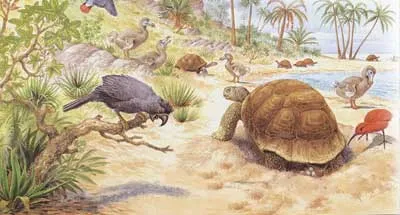
The fact is, however, that the punctuated evolution model is at least as groundless, devoid of evidence, and ultimately discredited as the gradual evolution theory.
Gould's admissions regarding "the mistaken perspective in the past" are criticisms aimed at the supporters of gradual evolution:
We have long known about stasis and abrupt appearance, but have chosen to fob it off upon an imperfect fossil record.37
As Niles Eldredge describes it, the supporters of gradual evolution ignored one very important fact:
Paleontologists ever since Darwin have been searching (largely in vain) for the sequences of insensibly graded series of fossils that would stand as examples of the sort of wholesale transformation of species that Darwin envisioned as the natural product of the evolutionary process. Few saw any reason to demur—though it is a startling fact that ... most species remain recognizably themselves, virtually unchanged throughout their occurrence in geological sediments of various ages.38
Niles Eldredge and the archaeologist Ian Tattershall of the American Museum of Natural History underlined how Darwin's idea of evolution had been disproved by the stasis in the fossil record:
Darwin's prediction of rampant, albeit gradual, change affecting all lineages through time is refuted. The record is there, and the record speaks for tremendous anatomical conservation. Change in the manner Darwin expected is just not found in the fossil record.39
Elsewhere, Stephen Jay Gould described how stasis, evidence of non-evolution, was ignored by the adherents of evolution:
Stasis, or nonchange, of most fossil species during their lengthy geological lifespans was tacitly acknowledged by all paleontologists, but almost never studied explicitly because prevailing theory treated stasis as uninteresting nonevidence for nonevolution. . . . The overwhelming prevalence of stasis became an embarrassing feature of the fossil record, best left ignored as a manifestation of nothing (that is, nonevolution).40
All of Gould and Eldredge's efforts were to adapt the theoretical concept of evolution to the actual fossil record. For that reason they suggested that stasis itself was the most important proof of their evolutionary claims. In some way, they viewed the unchanging nature of the fossil record as evidence for change! Since they could not reconcile the fossil record with the theory of evolution, they adapted the theory to the record. This was the mindset that launched the punctuated model of evolution.
In an article in New Scientist, Tom S. Kemp, curator of the Oxford University museum's zoological collections, described how findings had been turned into evidence for the theory of evolution, just as in the case of punctuated evolution:
In other words, when the assumed evolutionary processes did not match the pattern of fossils that they were supposed to have generated, the pattern was judged to be ‘wrong.' A circular argument arises: interpret the fossil record in terms of a particular theory of evolution, inspect the interpretation, and note that it confirms the theory. Well, it would, wouldn't it?41
According to the proponents of the punctuated model of evolution, stasis in the fossil record represented the "equilibrium" in the theory defined as punctuated equilibrium. The theory maintains that under environmental pressures, a species can have evolved in as short a space of time as only a few thousand years. It then entered a period of stasis and remained unchanged for millions of years.
Therefore, proponents believed that this claim could account for the stasis in a large proportion of living things. In this way, they thought they had covered up the challenge that the fossil record poses to evolution. But this was a grave deception.