

Reading time: ~7 min read
Coral reefs come about gradually as dead corals, algae and crustaceans accumulate in different layers. They are found in tropical seas and can spread over rather large areas. In addition to their wealth of color and form, coral reefs harbor a variety of life, comparable to that in the rain forests. Many marine creatures, from planktons too small to be seen with the naked eye to sharks up to 6 meters (19 feet) long inhabit coral reefs.
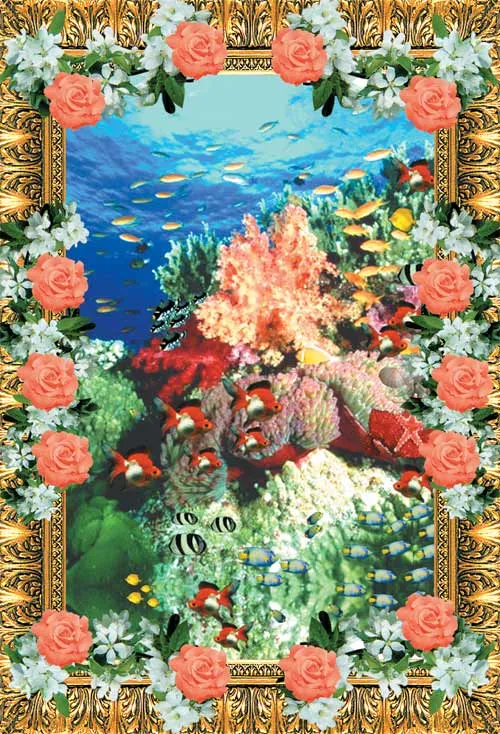
Tens of thousands of widely different species live on coral reefs: Spotted, striped, brightly colored fish with striking patterns, fish that live in colonies, bright-hued corals, crustaceans with different appearances, eye-catching sea plants, sponges unique to coral reefs, mussels, oysters, sea urchins, crabs, starfish, micro-organisms, invertebrates...
At 2,000 kilometers (1,243 miles) long, Australia's Great Barrier Reef is the world's largest structure composed of living organisms. It plays host to 2,000 different species of fish, 350 species of coral, and 4,000 species of mollusks.55 But these are only the numbers of species identified to date. New species of animal and single-celled organisms are discovered every year.
According to Marjorie Reaka-Kudla, Professor of Zoology at Maryland University, the calculated number of described species on coral reefs is 93,000, and the estimated number should be about 600,000- 950,000 species.56
In the same way as rain forests, coral reefs are full of living things created in such a way as to complement one another and meet each other's needs. For example, coral polyps live shared or symbiotic lives with single-celled algae (zooxanthellae) inside their tissues and green algae on their outer surfaces. Coral polyps take some of the nutrients produced by algae through photosynthesis. Algae, on the other hand, obtain the nutrients they need from the coral polyps. At the same time, the polyps provide a safe place for the algae to live.
Coral reefs are generally found in waters classified as being poor in terms of nutrients.57 The question of how the reefs managed to grow in such waters has long been of great interest.58 According to the latest research, one reason for the wealth of species on the reefs is that these animals work together in harmony and co-operation. One study published in the 18 October, 2001 edition of Nature magazine, revealed the importance of the species of sponges, mussels and ringworms living in the cavities in the reefs. By filtering vegetable plankton, these organisms, most of which are very small, secrete substances such as ammonia and phosphate, needed by coral animals.59 In short, the system—consisting of thousands of small living species living in cavities in the reefs—serves like an enormous filtering station.
We obtain some real benefits from the micro-organisms, plants and animals in the ecosystem: Corals secrete the calcium they absorb from the sea in the form of calcium carbonate. Working like a sophisticated chemical laboratory, they play an important role in regulating carbon dioxide balances, in both the ocean and the atmosphere. The fish, mussels and other living organisms in the coral reefs represent food sources for hundreds of millions of people. Since coral reefs generally form close to the surface, they protect shorelines from the damaging effects of large waves, thus preventing erosion and reducing the harm done by storms. Thanks to coral reefs, the water between the shore and the reef is more tranquil in comparison to the open sea, constituting a habitat more suitable for fish and crustaceans.
In addition, the wealth of genetic material from the wide variety of life on coral reefs is used in medical research and in the development of new drugs. Douglas Chadwick, a biologist and writer for National Geographic magazine, expresses some of these benefits we enjoy from the coral reefs:
Humanity's ties to the creatures living around coral reefs may multiply as medical research taps more of the organisms at home there. Some have already yielded compounds active against inflammations, asthma, heart disease, leukemia, tumors, bacterial and fungal infections, and viruses, including HIV. Studies found that chemicals used by sea slugs and certain sponges to repel fish also work on land as insecticides. Screening the venom of tropical cone snails for pharmaceutical properties turned up a possible nonaddictive substitute for morphine. Sea whips, related to true corals, offer a potential painkillers as well, while coral skeletons themselves are being investigated as substrate for bone grafts. 60
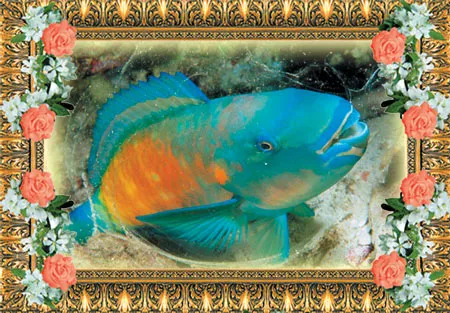
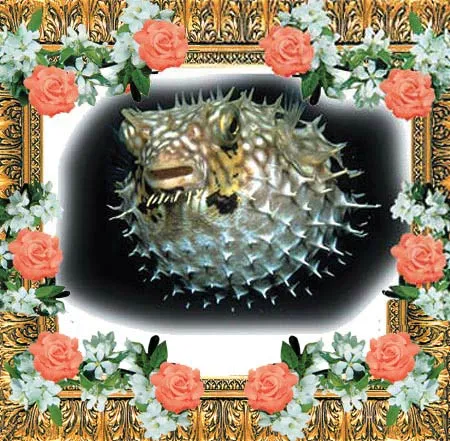
Each of the species living on coral reefs has been equipped with extraordinary systems and characteristics. For instance, some fish and other creatures have more color receptors than human beings, and therefore perceive colors better than we do.61 Most coral reef fish are able to change their colors to a certain extent, and some species can do so as quickly as a chameleon.62 The large-eyed sea bass and squirrel fish are able to hunt at night, or at depths where no daylight penetrates, thanks to their sensitive eyes. Puffer fish defend themselves by inflating their stomachs like a balloon and erecting their spines.63 Parrot fish camouflage themselves at night by covering themselves with a gelatinous sheath; they feed on algae by breaking off pieces of coral with their powerful, beak-like mouths.64 Scavenger fish and cleaner shrimp live off parasites on the fishes' skin. These, of course, are only a few of the perfect systems and flawless cooperations found among life forms on the reef.
Some reef-living fish species are able to camouflage themselves very well, thanks to their colors that closely match those of their surroundings. Species such as angel fish and butterfly fish possess very striking colors. Since they can easily be detected by predators, one would expect them to soon become extinct. But these fish survive despite their striking colors thanks to their own particular methods of defense. Evolutionists are unable to account for this state of affairs, which is the exact opposite of Darwinist expectations.
One evolutionist researcher studying this is the marine biologist Justin Marshall of Queensland University. In an article, "Why Are Reef Fish So Colorful?" in Scientific American magazine, Dr. Marshall describes this mystery "as tantalizing as it is beautiful." 65
In fact, there is no mystery here at all, nor anything disappointing, only history being repeated. Darwin himself described as "trifling particulars of structure [that] often make me very uncomfortable. The sight of a feather in a peacock's tail, whenever I gaze at it, makes me sick!"66 These same difficulties are also faced by his followers. In short, the variety of life on the reefs, animals with incomparable features and the prefect harmony among species represents a nightmare for Darwinists. To wake up from that nightmare, they need to admit that God created the reef fish with their stunning colors and appearances.
People who keep marine aquariums as a hobby know how very difficult it is to feed tropical reef fish and corals. The main reason is the need to constantly replicate these creatures' reef habitats. In a marine aquarium, the salinity, temperature, pH level, light, oxygen level and chemical combinations in the water need to be kept in balance. Such corals and fish in are prone to be affected by even small changes in their aquarium environments. The organisms will die unless the ideal conditions are maintained and constantly regulated by technological equipment.
Now, bearing in mind the difficulty of running a marine aquarium containing just a few species of coral and fish: Could the tens of thousands of species living on the coral reefs have come into being spontaneously, or by chance? Could their striking colors, impressive hunting and defense systems, unique body structures, sense organs, systems and genetic information be the work of coincidence? Could the reef environment—in which the plants, animals, plankton and micro-organisms have lived in harmony and order for millions of years—have come about without a superior and conscious intervention?
Of course these events are impossible. Anyone able to reason can see their illogicality. Reef creatures with their amazing characteristics demonstrate the sublimity and glory of their Creation; they reveal the infinite artistry and omniscience of God, their Creator.
References
- Douglas H. Chadwick, "Kingdom of Coral," National Geographic, 2002, http://www.nationalgeographic.com/ngm/0101/feature2/index.html ↩
- M.L. Reaka-Kudla, "The Global Biodiversity of Coral Reefs: A Comparison With Rain Forests," in Marjorie L. Reaka-Kudla, Don E. Wilson, Edward O. Wilson (editors), pp. 94, 102,. ↩
- Sarah Graham, "Scientists Explain How Corals Thrive in Nutrient-Poor Waters," Scientific American, 18 October 2001, http://www.sciam.com/article.cfm?articleID=000A8B4C-F12F-1C63-B882809EC588ED9F ↩
- C. Darwin, The Structure and Distribution of Coral Reefs, London: Smith, Elder & Company, 1842. ↩
- C. Richter, M. Wunsch, M. Rasheed, I. Kötter, M.I. Badran, "Endoscopic exploration of Red Sea coral reefs reveals dense populations of cavity-dwelling sponges," Nature, Vol. 413, 18 October 2001, pp. 726-730. ↩
- Douglas H. Chadwick, "Coral in Peril," National Geographic, January 1999, pp. 30-37. ↩
- Justin Marshall, "Why are Reef Fish So Colorful?," Scientific American: The Oceans, August 1998. ↩
- Ibid. ↩
- Ayşegül Yılmaz Günenç, "Mercan Kayalıklarında," Bilim ve Teknik, October 1999, p. 82. ↩
- Ibid. ↩
- Justin Marshall, Op cit., Scientific American, August 1998. ↩
- Carl Zimmer, Evolution: The Triumph of an Idea. New York: HarperCollins. p. 235. ↩