Reading time: ~1 min read
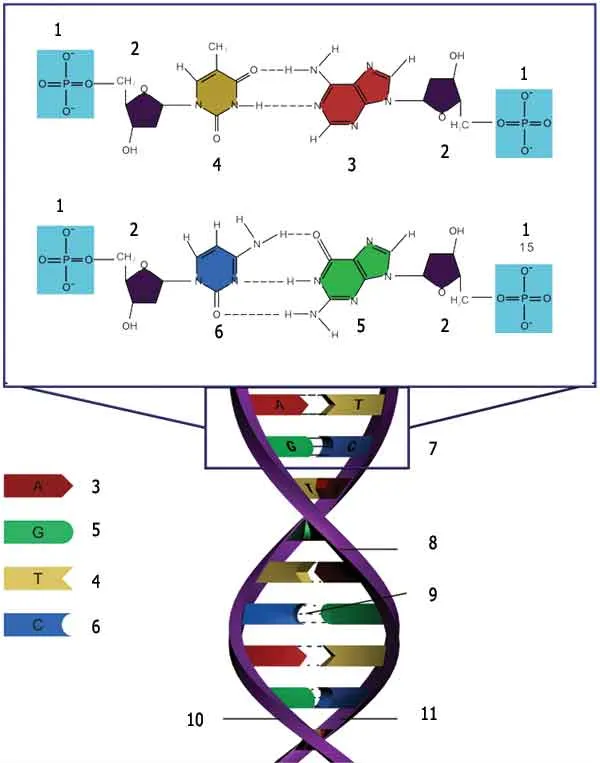
Phosphates keep together the nucleotide bases on DNA, because the DNA helix functions in an environment containing water, and water breaks down the bonds between phosphates and sugars. Thus it is both advantageous and essential that the phosphate groups in DNA be negatively charged. That negative charge eliminates the danger of the DNA being broken down in the watery environment surrounding it.
What compounds, other than phosphates, could establish a chemical bond and still manage to remain negatively charged? There are various possibilities. Yet none of these can form genetic information in the way that phosphate does. Silicic acid and arsenic esters break down rapidly in water. Although citric acid dissolves more slowly in water, it lacks the stability to maintain the molecule's geometry.36
Therefore, if phosphate did not have its own unique properties, the DNA's double helix could not form. No self-replication biochemical system could be established, and life would be impossible. The well-known professor of chemistry Frank Henry Westheimer says this: "All of these conditions are met by phosphoric acid and no other alternative is obvious."37 This situation and all the other details we have examined so far clearly show that our Lord has created the DNA molecule with miraculous properties. In one verse of the Qur'an, it is revealed that:
He knows what is in front of them and behind them. But their knowledge does not encompass Him. (Surah Ta Ha, 110)