

Reading time: ~6 min read
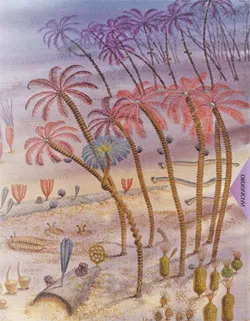
Stephen Jay Gould studied the structures exhibited by life forms in the Cambrian explosion and considered Burgess Shale in his award-winning book Wonderful Life. He described the fact revealed by this important discovery:
. . . we must understand that nothing happens most of the time—and we don’t because our stories don’t admit this theme. . . The Burgess Shale teaches us that, for the history of basic anatomical designs, almost everything happened in the geological moment just before [emphasis added], and almost nothing in more than 500 million years since.56
Simon Conway-Morris described the difficulty that the Burgess Shale “problematica” represented for evolution:
How can we be so optimistic, when some paleontologists still argue that the existence of the Burgess Shale problematica threatens to undermine a significant portion of evolutionary theory?57
Even while evolutionist scientists were struggling to account for the Burgess Shale beds, two other fossil locations similar to Burgess Shale were discovered in the 1980s: the Sirius Passet in northern Greenland and the Chengjiang in southern China. In these regions, the astonishing variety of animals that lived in the Cambrian revealed themselves in even greater detail. In particular, the fossil strata excavated in Chengjiang even contained the first vertebrates and were so well preserved that it was possible to distinguish all characteristics of the fossils.58
Internal organs and even nerves could clearly be seen. In the Chengjiang fossils, details existing nowhere else in the world were crystal-clear. Even the water channels in the bodies of creatures resembling jellyfish had been preserved. Of these fossils discovered in China, the number of species identified exceeded 100, and revealed the existence of 37 phyla. Together with fossils discovered in other locations, this number of phyla rose to 50. Dr. Paul Chien, head of the San Francisco University Biology department, who studied the Cambrian rock beds in China, remarked on their being: . . . more phyla in the very, very beginning, where we found the first fossils [of animal life], than exist now.59
By itself, the sudden emergence of phyla and other biological categories with no forerunners behind them is a fact that can reveal the invalidity of the theory of evolution. Yet another piece of evidence here also makes perfectly clear the invalidity of Darwinism: Compared with the present day, there are more basic physical structures and fewer species in the Cambrian. Organisms display fewer basic physical structures than they did in the Cambrian, even though there are more species. As you shall see in due course, this definitively invalidates the Darwinist claim that the number of phyla should increase over time and reveals that the theory of the origin of species is groundless speculation.
Andrew Parker of Oxford University has conducted research into Cambrian fossils and wrote the book In the Blink of an Eye, dealing with the Cambrian explosion. During an interview, he described the variety at Chengjiang:
They represent many of the phyla, the major groups of animals that exist today. We have a whole range of crustaceans and worms and jellyfish, and even the very first chordates are known from the Chengjiang fossils. So we have this whole diversity of forms preserved at one moment in time so we can actually see them all living together and we know how they all interacted, we know they have all their hard parts and we can even guess at their ecology because they’re all there in the same picture.60
The evolutionary dilemma that Andrew Parker described in those veiled terms was admitted rather more clearly by the Darwinist paleontologist James Valentine of the University of California, Berkeley:
Many of the durably skeletonized phyla appearing in Cambrian rocks are represented by a number of distinctive subgroups, classes, or orders that appear suddenly without known intermediates [emphasis added].61
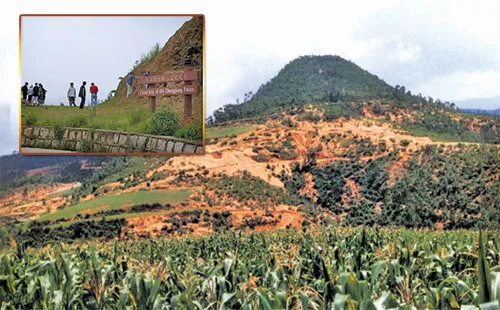
The fossils discovered in Chengjiang confirm the wondrous variety of Cambrian life forms. And as Valentine stated, there are no signs of any intermediate forms. Not one single intermediate fossil, of the kind so confidently expected by evolutionists, showing that one species evolved from one another, has ever been found from among tens of thousands of fossils. Because evolution never happened on Earth, it is therefore impossible for non-existent intermediates to be found. The Chengjiang discoveries were of particular importance because as we have just seen, the perfectly preserved Burgess Shale fossils were ignored for some 70 years. Dr. Paul Chien says:
[Against the fossils found in Chengjiang,] the scientists come out and say, “Oh yes, we’ve heard this before, and it’s very similar to the Burgess Shale,” and so forth. But the Burgess Shale story was not told for many years. The Burgess Shale was first found by Charles Walcott in 1909. Why was the story not reported to the public until the late 1980s?
At the very beginning, I thought it was a problem for them; they couldn’t figure out what was going on because they found something that bears no resemblance to the present animal groups and phyla. Walcott originally tried to shoehorn those groups into existing ones, but [his attempt] was never satisfactory.

It was puzzling for a while because they refused to see that in the beginning there could be more complexity than we have now. What they are seeing are phyla that do not exist now. That’s more than 50 phyla compared to the 38 we have now. (Actually, the number 50 was first quoted as over 100 for a while, but then the consensus became 50-plus.) But the point is, they saw something they didn’t know what to do with; that’s the scientifically honest position they’re placed in. Later on, as they began to understand things are not the same as Darwinian expectations, they started shutting up.62
Dr. Chien is making clear that for 70 years, evolutionist scientists made an effort to conceal this extraordinary discovery that challenges evolution. They attempted to cover up the fact that evolution never happened and tried to ignore one of the greatest discoveries in the history of paleontology.
However, the Cambrian fossils were so widespread, and there were so many specimens of them, that it was impossible for them all to be kept out of sight. Over the next century or so, evolutionists did all they could to depict the phenomenon as insignificant, but finally had to admit the inescapable truth. At a time when, according to them, there should have been no complex life forms, representatives of present-day and other phyla existed and survived for centuries, until some disappeared as suddenly as they had emerged.
There was no evolution in their past, nor any in their subsequent periods. The fact that evolutionist scientists remained silent and never performed any detailed research on this subject once again demonstrates that the claim they espouse is unscientific, and based upon completely false grounds.