

Reading time: ~16 min read
Neo-Darwinism attempts to prop up Darwin's theory by adapting it to scientific advances, and combining it with the genetic inheritance laws of the Austrian biologist Gregor Mendel. Also known as "the modern synthesis," neo-Darwinism actually makes Darwin's ignorance clear for all to see. Darwin sought to account for the variety in species through natural selection, but he was not aware that living things pass on their characteristics to subsequent generations by way of genetic inheritance. This new version of the theory of evolution results from an attempt to cover up that ignorance. But no matter how much neo-Darwinists may attempt to modernize their theory, they have never been able to succeed, since the theory is built on unsound foundations from the outset.
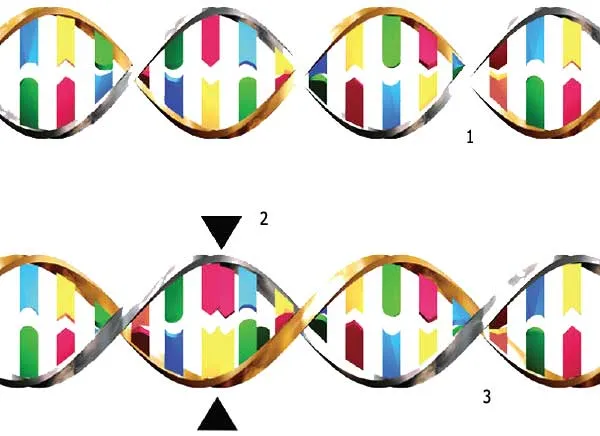
Like Darwin himself, neo-Darwinists maintain that the variety in life came into being spontaneously, by chance.222 In addition to this flawed logic, they depicted mutations –random genetic changes– as the origin of life. Since the errors arising during the replication of DNA were the smallest mutations possible, neo-Darwinists imagined that they could base their theories on that.223 But even the smallest replicaton error-a change in a single nucleotide-gives rise to extremely serious consequences.
Neo-Darwinists said that small changes in genetic information take place first in one site, then in another.224However, the biophysicist Dr. Lee Spetner emphasizes that the theory is not true: "The NDT says that large changes will eventually result. It's like becoming a millionaire by saving enough pennies."225
Prof. Marcel-Paul Schützenberger-a member of the French Academy of Sciences and a mathematician, biologist and doctor of medicine from Paris University-has refuted neo-Darwinism with mathematical proofs. In his book Mathematical Challenges in the Neo-Darwinian Interpretation of Evolution, he reaches this conclusion:
We believe that there is a considerable gap in the neo-Darwinian theory of evolution, and we believe this gap to be of such a nature that it cannot be bridged within the current conception of biology.226
According to neo-Darwinism, random genetic mutations represent the raw material of evolution. But as many scientists today agree, the level of complexity in life cannot be acquired through the processes of trial and error hypothesized by neo-Darwinism. Dr. Lee Spetner sets out the impossibility of this: "But if their variations are random, they too cannot account for a build up of genetic information. The chances are almost nil . . . you cannot expect to get a large adaptive genetic rearrangement by chance."227
All the explanations that evolutionists put forward for the origin of life are irrational and unscientific. One of the outspoken eminent authorities who admit as much the French zoologist Pierre Grassé, former head of the French Academy of Sciences. Though an evolutionist, Grassé nevertheless maintains that Darwinian theory cannot account for life, and says this regarding the logic of chance that forms the basis of Darwinism:
The opportune appearance of mutations permitting animals and plants to meet their needs seems hard to believe. Yet the Darwinian theory is even more demanding: A single plant, a single animal would require thousands and thousands of lucky, appropriate events. Thus, miracles would become the rule: events with an infinitesimal probability could not fail to occur. . . There is no law against daydreaming, but science must not indulge in it.228
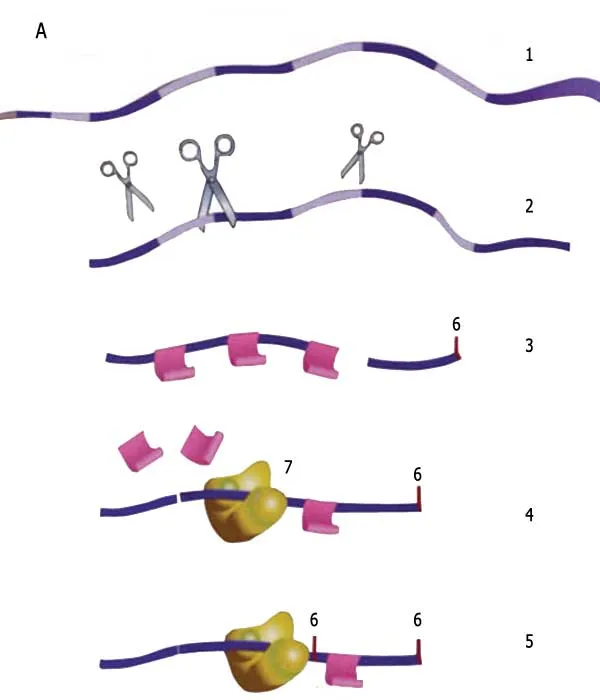
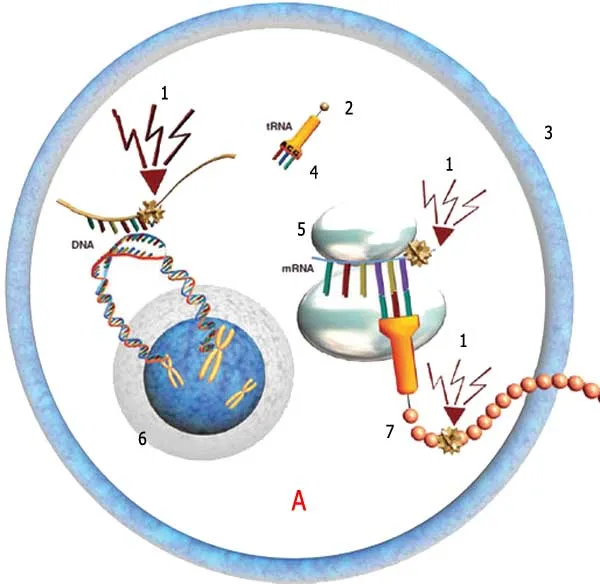
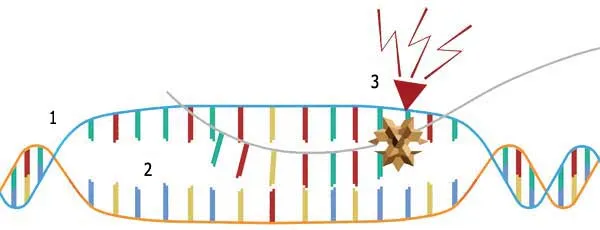
In addition, the mutations that they allege increased the information in DNA over the course of time, leading to variation, is no solution to the predicament in which Darwinists find themselves. Mutations are harmful breaks and changes of place of genes in the living DNA molecule, resulting from radiation or chemical effects. Since mutations damage the nucleotides or cause them to change places, they generally lead to damage too great for the cell to repair. For example, X-rays penetrate deeply in the body and cause major DNA damage. When DNA starts to be wrongly replicated, such faulty replication can manifest itself in the body as cancer. The mutagenic energy in sunlight can cause skin cancer, and various substances in cigarettes causes lung cancer. Incorrect replication in the 21st chromosome in the reproductive cell, for instance, leads to Down syndrome.
In order for the theory of evolution to account for the origin of life on Earth, it must point to some mechanism that adds new, useful characteristics, not damaging and destructive ones. How can a living thing acquire a new characteristic? The only answer evolutionists have is "By mutation." They maintain that all species emerged through random mutations acting on the DNA of a single germ cell-either egg or sperm. Yet mutations-the foundation of evolutionists' claims-do not cause living things to become more developed and perfect. Therefore, mutations are not the kind of mechanism as is needed by the theory of evolution, nor can they produce new characteristics. We shall consider only the broad outlines of how mutations do not, and cannot contribute to a species' evolution
Mutations Are Harmful:
Since they occur in a random manner, mutations almost always damage the organism concerned. Any random intervention in a complex structure will damage it rather than improve it. Indeed, there is not one single valid example of a beneficial random mutation of the kind proposed as an evolutionary mechanism.229 The changes brought about by mutations are only like those suffered by the residents of Hiroshima, Nagasaki and Chernobyl: death, genetic handicaps, and disease.
Prof. Walter L. Starkey from Ohio University makes clear the invalidity of claims regarding useful mutations:
Do you think it would be wise for you to spend hours near X-ray machine, or inside of a nuclear power plant? Would it be wise for you to go to Chernobyl, in Russia, where a nuclear power plant exploded? Should we actively try to destroy the ozone layer that shields us from radiation? If such radiations are likely to cause you to evolve, and develop new beneficial futures, then you should seek to be bombarded as much as possible by these sources of radiation. Maybe you could get a new eye in the back of your head. In reality, if you are smart, you will avoid such radiations, because they are much more likely to damage you than to improve you.230
All the mutations observed in human beings are harmful. All the mental and physical defects described in medical textbooks as examples of mutation such as Down syndrome, albinism or dwarfism, or diseases such as cancer, reveal mutations' destructive effects. Obviously, any process that handicaps people or causes them to become ill cannot be a mechanism that develops living things. DNA has a very complex order, and so any random effects in this molecule can only damage the organism. Prof. Starkey says this about these damaging effects of mutations:
Being bombarded by mutation-causing radiation, would be like shooting a new car with a 30-caliber rifle. Let's assume that it would be beneficial if the ballast resister in your ignition system were located inside the interior of your car, under the dashboard, rather than out near the hot engine . . .mutations caused by DNA copying errors would have a similar result. . . mutations are harmful by a ratio of at least 10,000 to one.231
Mutations Cannot Add New Information to DNA:
As a result of mutation, the components that make up genetic information are detached from their locations, damaged, or else transported to different regions of the DNA. They can never endow an organism with a new organ or a new attribute by adding new genetic information to its DNA. All they cause are abnormalities of existing characteristics, such as an extra leg sticking out of the pelvis, or an ear out of the stomach. Prof. Werner Gitt answers the question "Can new information emerge as the result of mutations?"
This idea is central in representations of evolution, but mutations can only cause changes in existing information. There can be no increase in information, and in general the results are injurious. New blueprints for new functions or new organs cannot arise; mutations cannot be source of new (creative) information.232
On the same subject, Prof. Phillip Johnson has this to say:
Spetner told them that the adaptive mutations cited by Darwinists are not information-creating. When a mutation makes a bacterium resistant to antibiotics, for example, it does so by disabling its capacity to metabolize a certain chemical. There is a net loss of information and of fitness in a general sense… one can sometimes "fix" a sputtering radio by hitting its case if the rough motion happens to reseat a loose wire or open a short circuit. But no one would expect to build a better radio, much less a television set, by accumulating such changes.233
The well-known evolutionist Stephen Jay Gould admits the facts regarding mutations:
You don't make new species by mutating the species . . .A mutation is not the cause of evolutionary change.234
There is yet another proof that mutations do not add new characteristics of the kind required by the theory of evolution. To produce new characteristics or new species, several atoms must be added to the organism's DNA.235 In human DNA, there are up to 204 billion atoms-3,000 times more atoms than in the DNA of the bacterium E. coli.236 For that reason, in order for a single-celled organism to develop into a human being, more than 200 billion atoms of carbon, hydrogen, nitrogen and phosphorus would have to be added to its DNA.237 As you know, carbon and nitrogen can be obtained from the air, hydrogen and oxygen from water, and phosphorus from soil. But the real problem is the extraction and relocation of these atoms in exactly the right place in the DNA molecule. Atoms would have to arrange themselves so as to contain sugar groups, phosphate groups and nitrogen bases with extraordinary complexity, and be located in just the right part of the double helix in order for a DNA molecule to function.238
Prof. Phillip Johnson explains how, just as in encyclopedias and computer programs, there is a very specific order in DNA, and that there must be a mechanism that produces genetic information. He also describes how random mutations have a negative impact on the information and regularity in DNA:
Random mutation is not such a mechanism, nor is natural selection, nor is any physical or chemical law. Laws produce simple repetitive order, and chance produces meaningless disorder. When combined, law and chance work against each other to prevent the emergence of a meaningful sequence. In all human experience, only intelligent agency can write an encyclopedia or computer program, or produce complex specified aperiodic information in any form. Therefore, the information necessarily present in organisms points to the conclusion that they are products of intelligent design.239
Mutations are Disordered:
Mutations do alter already existing structures, but in a completely disordered manner. Mutations have no complementary properties and have no cumulative effects toward any particular objective. Pierre Paul Grassé, former president of the French Academy of Sciences, says this about mutations' effects:
As soon as some disorder, even slight, appears in an organized being, sickness, then death follow. There is no possible compromise between the phenomenon of life and anarchy.240
In Order for a Mutation to Influence Subsequent Generations, it Must Arise Inside the Reproductive Cell: :
No change arising in any cell or organ of the body can be passed on to the next generation. For example, a person's arm may be exposed to radiation assume a form very different from its original appearance. But these changes cannot be passed on unless they take place in the DNA molecule in some reproductive cell. This precondition –that in order to affect future generations, the mutation must take place in only one reproductive cell, out of all the trillions of cells in the body– makes evolutionist expectations totally impossible.
Mutations Are Rare:
Mutations occur only very rarely. As a cell's DNA is being replicated, enzymes perform a regulatory function. Therefore, as you have seen in some detail, errors that survive the replication process are very rare. Calculations show that only one living thing in a million will be exposed to mutation.241 The molecular biologist Prof. Gerald L. Schroeder criticizes fictitious claims based on mutations:
The insights of molecular biology have revealed a complexity at every stage of life's processes such that, if we were forced to rely on random mutation to produce them step by step, in the words of Nobel laureate de Duve, "eternity would not suffice."242
Thus, in the words of Pierre Paul Grassé, "No matter how numerous they may be, mutations do not produce any kind of evolution."243
Mutations Cannot Bring about Changes of Species:
Experiments on fruit flies have been going on for many years. Many fruit flies exposed to radiation have given rise to mutant forms, such as flies with very large wings, extra wings or no wings at all. Yet no matter how deformed, they have still remained fruit flies and have not developed into any new species.
The slightest change in location or absence in the sequences in the genes can easily give rise to fatal consequences. It is impossible for random mutations to occur in such a delicate sequence as to cause one organism to evolve into another by adding to its genetic information. Indeed, in the laboratory, all animal embryos subjected to mutation in order to prove evolutionists' theories are born either deformed or dead.
All this goes to show that contrary to what evolutionists maintain, random mutations cannot account for the origin of living things. Not even the most advanced technology and intense work by the most skilled scientists can produce a new species. As you have seen, mutations can in no way cause the diversity in living things. The flawless sequence in DNA is solely the result of a very special creation. That creation belongs to Almighty Allah, Whose impeccable creation is described in the Qur'an:
It is Allah Who made the Earth a stable home for you and the sky a dome, and formed you, giving you the best of forms, and provided you with good and wholesome things. That is Allah, your Lord. Blessed be Allah, the Lord of all the worlds. He is the Living-there is no deity but Him-so call on Him, making your religion sincerely His. Praise be to Allah, the Lord of all the worlds. (Surah Ghafir, 64-65)
The theory of evolution, which maintains that inanimate substances spontaneously came together to form living things with such glorious features as DNA, is a fantasy that violates both science and reason. Since life has a blueprint (DNA) and all living things are made in the light of that blueprint, the one manifest conclusion is that a sublime Creator has produced that blueprint. All living things come into being through the creation of Almighty and Omniscient Allah, Who reveals this in the Qur'an:
He is Allah-the Creator, the Maker, the Giver of Form. To Him belong the Most Beautiful Names. Everything in the heavens and Earth glorifies Him. He is the Almighty, the All-Wise. (Surat al-Hashr, 24)