

Reading time: ~7 min read
Apart from amateurs with only a superficial knowledge of the subject, just about all evolutionists are well aware of the real difficulty they face in trying to account for the diversity of species on Earth. In his book Genetics and the Origin of Species, Theodosius Dobzhansky, one of the architects of neo-Darwinism, stated that the real problem facing evolutionists was the variety of life.200
This is the real issue on which Darwin and his followers must shed light. In The Origin of Species, Darwin offered no concrete evidence, but merely speculated. In one letter, cited by his son Francis Darwin in his book Charles Darwin's Life and Letters, he admitted this: "When we descend to details, we can prove that no one species has changed."201
Darwin hoped that the answers to these questions would later be found and the formation of species proven over the course of time and with further scientific research. On the contrary, scientific discoveries have refuted Darwin every time. Despite all the efforts made by evolutionists over the intervening 150 years, speciation through evolutionary mechanisms has remained devoid of any proof to support it—as shown by honest confessions on the subject by various evolutionists.
Although speciation is the backbone of the theory of evolution, it is also a concept strikingly shrouded in darkness. (More accurately, evolutionists possess no other evidence than the examples of micro-evolution and variation they have distorted.) For example, in a paper published in 1999, the Indiana University biologists Troy Wood and Loren Reiseberg wrote that very little is known about the biological mechanisms that give rise to species formation.202 As Professor Gareth Nelson of the American Museum of Natural History admits, "The ‘species problem'' is perennial, and speciation remains as much a black box as ever."203
Cornell University's Professor Richard Harrison sets out the latest position in an article published in Nature magazine in 2001:
Natural communities harbor an enormous variety of species ... But what of the origin of diversity? Much less has been written about how new species arise—although the process of speciation is central to evolutionary biology.204
It is not at all surprising, actually, that so very little has been written, because scientific discoveries have revealed that one species cannot turn into another and that change takes place only within species, and within specific bounds. Not a single example of speciation through evolutionary mechanisms has been observed. In an article published in the 18 January, 2001, edition of Nature, the evolutionist biologists Darren Irwin, Staffan Bensch and Trevor Price admit as much: "The evolutionary divergence of a single species into two has never been directly observed in nature."205
Professor of Anthropology Jeffrey Schwartz, from Pittsburgh University, emphasizes the same fact in his book, Sudden Origins: Fossils, Genes, and the Emergence of Species:
... Nevertheless, it was and still is the case that, with the exception of Dobzhansky's claim about a new species of fruit fly, the formation of a new species, by any mechanism, has never been observed. 206
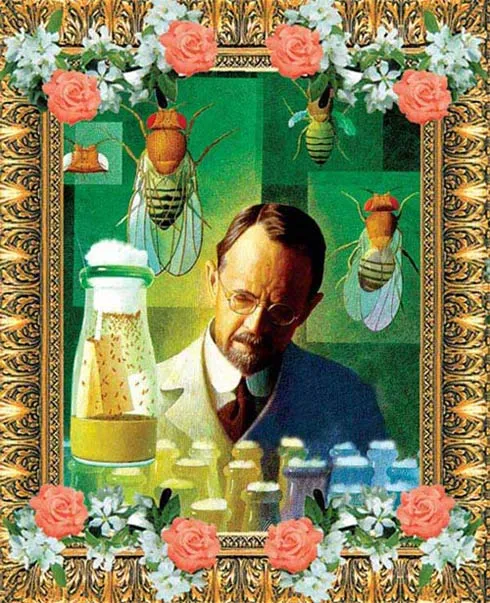
Faced with these facts, some evolutionists propose an alibi along the lines of "We cannot observe speciation through evolution, because evolutionary mechanisms act over such lengthy periods of time. Therefore, speciation cannot be observed in nature or in the laboratory." This search for consolation has no scientific basis: No case of speciation has ever been seen in creatures such as fruit flies or bacteria, whose life spans are very brief. Thousands of generations of these organisms can therefore be observed by a single scientist in a few years' time.207 Countless experiments and studies have to date been conducted on various micro-organisms and animal species, and all have demolished evolutionist dreams.
One evolutionist, Kevin Kelly, editor of Wired magazine and director of the All Species Foundation, states that:
Despite a close watch, we have witnessed no new species emerge in the wild in recorded history. Also, most remarkably, we have seen no new animal species emerge in domestic breeding. That includes no new species of fruit flies in hundreds of millions of generations in fruit fly studies, where both soft and harsh pressures have been deliberately applied to the fly populations to induce speciation... In the wild, in breeding, and in artificial life, we see the emergence of variation. But by the absence of greater change, we also clearly see that the limits of variation appear to be narrowly bounded, and often bounded within species. 208
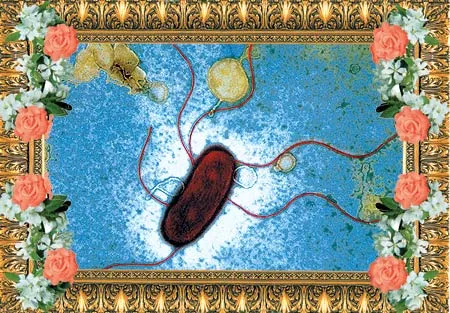
Fruit flies have been reared and constantly subjected to mutations for some 70 years, but no speciation has ever been encountered. No evolutionary change has taken place, and fruit flies have always remained fruit flies.209 Similarly, no new species or multi-celled organism has emerged from the experiments and research conducted for many years on the single-celled bacterium Escherichia coli, which has always remained E coli.210
The fossil record itself also definitively rejects the concept of speciation. In the fossil record, there is no trace of the countless intermediate forms that should, according to Darwinism, have once existed.211
The origin of species, the emergence of new species and the diversity of life cannot be explained in terms of natural processes and random factors, as the theory of evolution maintains. Moreover, recent findings show that Darwinism is an unscientific and unrealistic theory, and a great many scientists today are aware of this. However, very few biologists express such views openly, out of a fear of being excluded from the scientific world. One of these is Professor Lynn Margulis of Massachusetts University, whose views on this subject were included in Kevin Kelly's book Out of Control: The New Biology of Machines:
"It is totally wrong. It's wrong like infectious medicine was wrong before Pasteur. It's wrong like phrenology is wrong. Every major tenet of it is wrong," said the outspoken biologist Lynn Margulis about her latest target: the dogma of Darwinian evolution. [With her theses], Margulis was ... denouncing the modern framework of the century-old theory of Darwinism, which holds that new species build up from an unbroken line of gradual, independent, random variations. Margulis is not alone in challenging the stronghold of Darwinian theory, but few have been so blunt. 212
In "Ecology, Evolution and Behavior," an article in the 11 May, 2000, edition of Nature magazine, Professor Tilman neatly sum up the evolutionist dilemma:
The existence of so great a diversity of species on Earth remains a mystery.213
In conclusion, evolutionists have no answers regarding the origin and diversity of species. If they wish to find the answer, then they must abandon their belief in Darwinist deceptions and instead accept that it is Omniscient and Almighty God Who created every living species with its rich potential for variation.
Creation is unique to God. No matter how they may strive, those who deny this fact will inevitably be doomed to disappointment:
Humanity! An example has been made, so listen to it carefully. Those whom you call upon besides God are not even able to create a single fly, even if they were to join together to do it. And if a fly steals something from them, they cannot get it back. How feeble are both the seeker and the sought! (Surat-al-Hajj, 73)

References
- Theodosius Dobzhansky, "Genetics and the Origin of Species", American Midland Naturalist, Vol. 18, No. 6 (Nov., 1937), preface. ↩
- Francis Darwin, The Life and Letters of Charles Darwin, Vol. II, New York: D. Appleton and Company, , 1888, p. 210. ↩
- Troy E. Wood, Loren H. Rieseberg, "Speciation: Introduction", Encyclopedia of Life Sciences, 1999, www.els.net. ↩
- G. Nelson, "Species and Taxa: Systematics and Evolution,", in D. Otte, J.A. Endler (editors), Speciation and its Consequences, Sunderland, Massachusetts: Sinauer Associates, 1989, pp. 73-74. ↩
- Richard G. Harrison, "Diverse origins of biodiversity," Nature, Vol. 411, 7 June 2001, pp. 635-636. ↩
- D.E. Irwin, S. Bensch, T.D. Price, "Speciation in a ring," Nature, Vol. 409, 18 January 2001, p. 333. ↩
- Jeffrey H. Schwartz, Sudden Origins: Fossils, Genes, and the Emergence of Species, New York: John Wiley & Sons, , 2000, p. 287. ↩
- For detailed information, see , Darwinism Refuted, New Delhi: Goodword Books, November 2000. ↩
- Kevin Kelly, Out of Control: The New Biology of Machines, London: Fourth Estate, 1995, p. 475. ↩
- Gordon R. Taylor, The Great Evolution Mystery, New York: Harper & Row, 1983, p. 48. ↩
- L.P. Lester, R.G. Bohlin, The Natural Limits to Biological Change, second edition, Dallas: Probe Books, , 1989, p. 88. ↩
- For detailed information, see , Darwinism Refuted, New Delhi: Goodword Books, November 2000. ↩
- Kevin Kelly, Op cit., pp. 470-471. ↩