

Reading time: ~6 min read

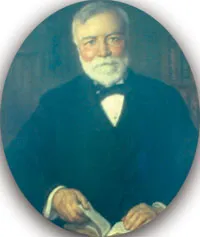
Most businessmen who supported unrestrained capitalism had actually been raised as believers in God. Later, however, under the influence of Darwinism's false suggestions, they abandoned their belief. For example, the American industrialist Andrew Carnegie, one of the foremost names in the steel industry in the 19th century, had first been devoted to Christianity. In his autobiography, Carnegie openly described how he and many of his friends had fallen under the deceptions of Darwinism.
However, the theory of evolution that Carnegie regarded as a fact, consisted of falsehood in its entirety. In the years that followed, advances in the world of science revealed the true face of that deception. Yet at that time, other businessmen who made the same error as Carnegie accepted savage capitalism as a result of Darwinist suggestion. This led them into regarding ruthless competition as perfectly justified to make even more money, and into attaching no value to altruism and human life.
Carnegie thought that competition was an inevitable law of life and constructed his entire philosophy upon that error. He maintained that, although the law of competition made it difficult for some people, it was best for the race, because it ensured the survival of the fittest in every department.27
Those who first introduced Carnegie to Darwinism were a number of so-called free and enlightened thinkers seeking a new “religion of humanity,” whom he met at the home of a New York University professor.28 One of the members of Carnegie's intimate circle was Herbert Spencer, the follower of Darwin and one of the most important figures in Social Darwinism. These businessmen adopted the twisted thinking of Spencer and Darwin, but were unable to calculate the impasse into which it would drag both them and their society.

Richard Milner, an anthropologist from the American Museum of Natural History and author of The Encyclopedia of Evolution, describes how Carnegie fell under the influence of Darwinism:
Carnegie rose in business to become a powerful, ruthless tycoon who exploited man and Earth, crushed competition, and justified his actions by a philosophy of Social Darwinism. Entrepreneurial competition, he believed, does a service to society by eliminating the weaker elements. Those who survive in business are “fit,” and therefore deserve their positions and rewards.29
Carnegie and those who thought like him made a grave error to assume that being powerful and ruthless was part of business life. It is perfectly natural that people should earn a living in order to live at ease and in comfort. However, it is completely unacceptable to cause harm to others, to turn a blind eye to people in difficult circumstances for the sake of one's own interests, or to oppress the weak in order to increase one's own power still further. God has commanded people to be honest in business, as in all other spheres, and to protect the rights of the needy. It is an enormous lie to suggest that by oppressing the weak and even seeking to eliminate them altogether, one is aiming for the good of society.
In his later years, Carnegie always used Darwinist expressions in his conversations, statements and writings. In his book Andrew Carnegie, the historian Joseph F. Wall says this:
Not only in his published articles and books but also in his personal letters to business contemporaries, Carnegie makes frequent and easy allusions to the Social Darwinist credo. Phrases like “survival of the fittest,” “race improvement,” and “struggle for existence” came easily from his pen and presumably from his lips. He did see business as a great competitive struggle...30
Another of those taken in by Darwinist suggestions was the famous American industrialist John D. Rockefeller, who said that: “growth of a large business is merely a survival of the fittest ... the working out of a law of nature…”31
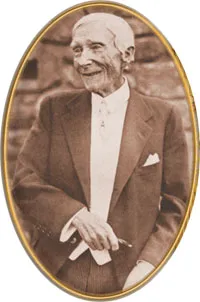
One can see one of the clearest instances of the effect of Darwinism on the business world in Spencer's American trip, which Richard Hofstadter describes in Social Darwinism in American Thought:
However imperfect the appreciation of the guests for the niceties of Spencer's thought, the banquet showed how popular he had become in the United States. When Spencer was on the dock, waiting for the ship carry him back to England, he seized the hands of Carnegie and Youmans. “Here,” he cried the reporters, “are my two best American friends.” For Spencer it was a rare gesture of personal warmth; but more than this, it symbolized the harmony of the new science [Social Darwinism] with the outlook of a business civilization.32
One reason why some capitalists adopted Social Darwinism was that it absolved the wealthy from any responsibility for the poor. In societies that preserve moral values, the rich are expected to show an interest in helping the poor and needy, and Social Darwinism attempted to eliminate that virtue. In The Golden Door: The United States from 1876 to 1918, science writer Isaac Asimov comments on this ruthless aspect of Social Darwinism:
Spencer coined the phrase “survival of the fittest” and in 1884 argued, for instance, that people who were unemployable or burdens on society should be allowed to die rather than be made objects of help and charity. To do this, apparently, would weed out unfit individuals and strengthen the race. It was a horrible philosophy that could be used to justify the worst impulses of human beings.33
Just as those who implemented savage capitalism supported Darwinism, so Darwinists supported them. For example, William Graham Sumner claimed that millionaires were “the fittest individuals in society,” then made illogical deductions that they therefore deserved special privileges and were “naturally selected in the crucible of competition.”34 In an article about Social Darwinism in The Humanist periodical, professor of philosophy Stephen Asma describes Spencer's support for capitalists:
Spencer coined the phrase survival of the fittest, and Darwin adopted the parlance in later editions of his Origin of Species. ... According to Spencer and his American disciples—business entrepreneurs like John D. Rockefeller and Andrew Carnegie—social hierarchy reflects the unwavering, universal laws of nature. Nature unfolds in such a way that the strong survive and the weak perish. Thus, the economic and social structures that survive are “stronger” and better, and those structures that don't were obviously meant to founder.35
But as has already been emphasized, spiritual values and their preservation represent the principal element in the progress of societies. In societies where the spirit of cooperation and solidarity is strong, where people approach one another with compassion and respect, economic difficulties in circumstances can easily be overcome in a spirit of togetherness. But where human relations have disappeared, and people lacking any compassion and understanding regard everyone else solely as rivals, many more destructive effects began to arise, even if there is economic progress. Therefore, all individuals in a society need to produce solutions to raise the quality of life and well-being, to bring about an environment where people can enjoy not just economic but psychological security. Obviously, that can only happen by living by religious moral values. As has been proved countless times, no movement or ideology incompatible with religious moral values can ever provide the well-being, peace and security for which people long.
References
- Kenneth Hsu, The Great Dying; Cosmic Catastrophe, Dinosaurs and the Theory of Evolution, New York, Harcourt, Brace, Jovanovich, 1986, p. 10. ↩
- Joseph F. Wall, Andrew Carnegie, New York: Oxford University Press, 1970, p. 364. ↩
- Richard Milner, Encyclopedia of Evolution, 1990, p. 72. ↩
- Wall, Andrew Carnegie, p. 389. ↩
- William Ghent, Our Benevolent Feudalism, New York: Macmillan, 1902, p. 29. ↩
- Hofstadter, Social Darwinism in American Thought, p. 49. ↩
- Isaac Asimov, The Golden Door: The United States from 1876 to 1918, Boston: Houston Mifflin Company, 1977, p. 94. ↩
- Milner, Encyclopedia of Evolution, p. 412. ↩
- Stephen T. Asma, "The New Social Darwinism: Deserving Your Destitution," The Humanist, 1993, 53(5):11, 10/3. ↩