

Reading time: ~3 min read
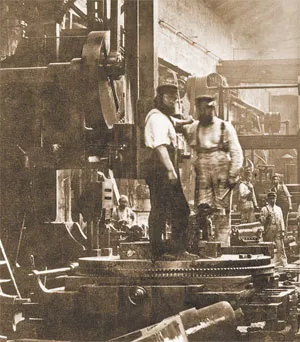
With the Industrial Revolution that began in England and soon spread to the whole of the rest of the world, new factories were built and machines began to be used in them. People were frequently injured because some employers attached no value to human life, especially that of the workers, and refused to take the necessary safety precautions. Most of these injuries resulted either in death or in the loss of fingers, hands or arms. It has been determined that in the 1900s a million workers a year died, suffered serious handicaps or fell sick.19
For workers who spent their lives in a factory, the loss of a limb or organ was almost inevitable. During their working lives, more than half of workers either fell ill or suffered serious injuries such as the loss of arms and legs, or of sight or hearing. For example, workers manufacturing stiff brim hats suffered mercury poisoning. Almost all radium dial painter workers ended up with cancer.20
Although employers were fully aware of working conditions and the accidents taking place, some took no steps at all to improve conditions. Many steel mill foundry workers worked twelve-hour shifts in temperatures of 40 to 50 degrees C (117oF) for very low wages.21 In 1892, U.S. President Benjamin Harrison summarized these inhuman conditions by saying that every day, the average American worker faced the same hazards as a soldier at war.22
Some capitalist businessmen attached no importance to human life and regarded it as expendable. During the construction of the railroads alone, hundreds lost their lives due to bad conditions.23 One of the most striking examples of this ruthlessness is of the American businessman J.P. Morgan, who purchased 5,000 defective rifles at $3.50 apiece and sold them to the U.S. Army for $22. In other words, he had so lost any trace of moral comprehension that he was capable of cheating his own nation and endangering the lives of its enlisted men. Soldiers who used these defective rifles had their thumbs blown off.24 Troops injured by these rifles sued Morgan but lost, because in those days the courts generally decided in favor of the robber barons.25
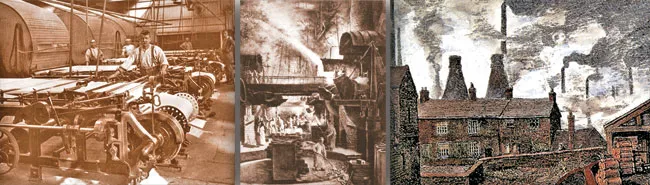
When asked to build roof protection for his workers, one of the capitalist employers of the time replied, that “men are cheaper than shingles”—another example of the ruthlessness of those days.26
At the root of all this cruelty, the influence of Darwinism can be easily discerned. A world view that regards humans as a species of animal, and believes in the lie that some people are less developed than others, that life is a place of struggle where only might prevails, results in ruthlessness, pitilessness and oppression.
References
- Robert Hunter, Poverty, New York: Torchbooks, 1965. ↩
- Jeanne Stellman, Susan Daum, Work is Dangerous to Your Health, New York: Random House Vintage Books, 1973. ↩
- Otto Bettmann, The Good Old Days! They Were Terrible! New York: Random House, 1974, p. 68. ↩
- Ibid., p. 70. ↩
- Howard Zinn, A People's History of the United States, New York: Harper Collins, 1999, p. 255. ↩
- Ibid. ↩
- Bettmann, The Good Old Days! They Were Terrible!, p. 71. ↩
- Ibid. ↩