

Reading time: ~2 min read
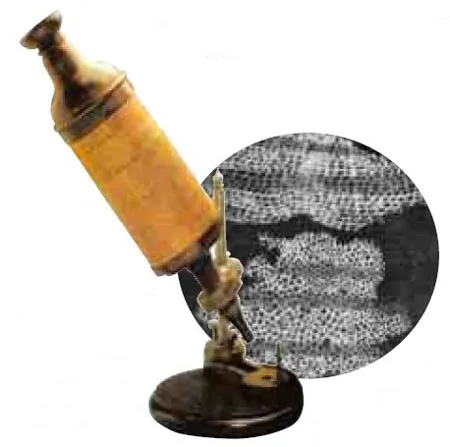
In the period when Darwin published his book The Origin of Species and put forward his theory of evolution, science was very backward. For example, the cell, which is today known to possess a most complex system, was only visible as a blot through the primitive microscopes in use at the time. For this reason Darwin saw no problem in claiming that life came about by chance from non-living material.
In the same way, the insufficiency of the fossil record at that time made it possible for it to be claimed that living creatures had come about from each other by minute changes. Whereas today, it is certain that the fossil record, as we explained a short while above, offers not one piece of evidence to support Darwin's claim that living creatures had come about by developing from one another. Up until recently, evolutionists used to try to get over the dilemma facing them by saying, "It will be found one day in the future." But they are now in the position of being unable to hide behind this explanation. (For detailed information see Chapter "The Misconception of Evolution")
Whatever the case, there was no change in the Darwinists' attachment to the theory of evolution. Supporters of Darwin have come down to our day by handing their faithfulness to Darwin on to one another like an inheritance for the last 150 years.
All right, what is the reason for Darwinism, despite the fact that its scientific invalidity is now openly apparent, appealing to certain circles, and for heavy propaganda being made regarding it?
The most defining feature of Darwin's theory is its denial of the existence of a Creator. According to the theory of evolution, life formed itself, by coincidence, from innate matter. This claim of Darwin provided a false scientific support for all atheist philosophies, beginning with materialist philosophy. Because up until the 19th century the great majority of men of science looked at science as a method of learning and discovering what God had created. Because this belief was widespread, atheist and materialist philosophies were unable to find suitable ground in which to develop. But by denying the existence of a Creator and forming an illusory support for atheist and materialist belief, the theory of evolution was a wonderful opportunity for them. For this reason they both identified with Darwinism and adapted the theory to their own ideologies.
Beside Darwinism's denial of the existence of God, another claim emerged to support 19th century materialistic ideologies: "The development of living creatures is linked to the struggle for life in nature. This struggle goes to the strongest. The weak are condemned to defeat and extinction."
Darwinism's co-operation with ideologies which have brought pain and disaster to the world is clearly revealed in this point.