Reading time: ~3 min read
Before we turn to the pain and disasters that Darwinism has brought to the world, let us take a brief look at its history. Many people believe the theory of evolution, first put forward by Charles Darwin, to be a theory based on firm scientific evidence, observation and experiment. Whereas, as the originator of the theory of evolution is not Darwin, so the source of the theory is not scientific proof.
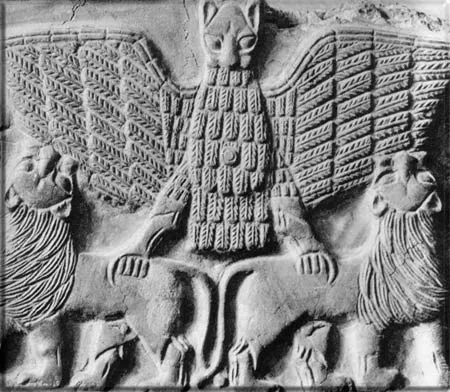
At one period in Mesopotamia, when idol-worshipping religions had hegemony, superstitions and myths regarding the roots of life and the universe abounded: one of these was the belief "evolution." According to the Enuma-Elish epic, which dates back to the Sumerians, there was a raging flood, and from this the gods called Lahmu and Lahamu suddenly emerged. According to the superstition, these idols first created themselves and then, becoming universal, formed other matter and living creatures. In other words, according to Sumerian myth, life suddenly came into being from the non-living watery chaos, evolved and developed.
We can see that this belief shows a close accordance with the theory of evolution's claim that "living things developed and evolved from non-living things." From this we can see that the idea of evolution does not belong to Darwin, but originally to Sumerian idol-worshippers.
Later, the myth of evolution found more space to live in another idol-worshipping civilisation, Ancient Greece. Ancient Greek materialist philosophers counted matter as the only thing which existed. They turned to the myth of evolution, an inheritance from the Sumerians, to explain how living things came about. In this way, materialist philosophy and the myth of evolution came together in Ancient Greece. From there it was carried to the culture of Rome.
These two concepts, each a myth belonging to idol-worshipping cultures, reappeared in the 18th century. Some European thinkers who studied ancient Greek sources took a liking to materialism. The common feature of these thinkers was that they were opponents of religion.
In this environment the first person to take the theory of evolution on in a detailed way was the French biologist Jean Baptiste Lamarck. In his theory, which would later be understood to be false, Lamarck proposed that all living creatures evolved from one another by small changes throughout their lives. One person who repeated Lamarck's claims, in a slightly different way, was Charles Darwin.
Darwin put forward this theory in his book The Origin of Species, which he published in England in 1859. In this book, the myth of evolution, which had come down from ancient Sumer, was put forward in some detail. He claimed that all species of living creatures came from one ancestor, born by chance in the water, and that they had grown different from one another by small changes which came about by coincidence.
Darwin put forward this theory in his book The Origin of Species, which he published in England in 1859. In this book, the myth of evolution, which had come down from ancient Sumer, was put forward in some detail. He claimed that all species of living creatures came from one ancestor, born by chance in the water, and that they had grown different from one another by small changes which came about by coincidence.
This claim of Darwin's did not win much general acceptance from the men of science of his time. Fossil experts in particular were aware that Darwin's claim was nothing but the product of a fantasy. But despite this Darwin's theory began to win more support from different circles as time passed. Because Darwin and his theory provided the missing foundation for the forces ruling in the 19th century.