

Reading time: ~4 min read
Darwin was amazed when he found a fossilized ginkgo leaf during his research. An identical counterpart to something living today was found with exactly the same appearance as it has today in strata dating back millions of years. This fossil, which on its own was sufficient to disprove his theory and which caused Darwin enormous concern, was described by Darwin in person as a "living fossil."
If Darwin were alive today, there is no doubt that his alarm on this subject would be even greater because the ginkgo is not the only living fossil to have survived. Some of the more than 350 million fossils that have been unearthed to date belong to complete and fully formed extinct entities, while the majority represent living fossils. Fossil specimens dating back millions of years from very many species living today have been discovered and put on display. (For details see http://www.fossil-museum.com/fossils/ and http://atlasofcreation.com/index.php) The horses, giraffes, fish, dogs, birds and reptiles alive today have all left traces dating back millions of years with the same states and appearances that they have now. And these fossils are in complete harmony with the organisms around today. There is no difference between fossils dating back millions of years and contemporary living things. Life forms have never changed. They are the same now as when they were first created.

Niles Eldredge, the well-known evolutionist paleontologist and curator at the American Museum of Natural History, summarized their helplessness in the face of the reality that living fossils are one of the greatest dilemmas confronting evolution:
... there seems to have been almost no change in any part we can compare between the living organism and its fossilized progenitors of the remote geological past. Living fossils embody the theme of evolutionary stability to an extreme degree. ....We have not completely solved the riddle of living fossils.53
Although Eldredge attempts, in his own eyes, to conceal Darwinists' despair by the use of the term "evolutionary stability" and seeks to give the impression that as if "an evolutionary process really did take place in the past, but then underwent stability" the fact of the matter is this: the fossil record clearly proves that evolution never happened at any time. All living species appeared in a moment with all the characteristics they possess today, and have never changed over the course of tens of millions of years. Fish have always existed as fish, reptiles as reptiles, mammals as mammals and human beings as human beings. The fossil record, Darwin's greatest hope, has proved to be the strongest evidence refuting his theory.
There is no doubt that this state of affairs constitutes a huge rout for the theory of evolution, which is unconfirmed by even a single transitional fossil. That is why Darwinist circles cover up the existence of living fossils and never bring them up, despite their being well aware of the true position. Someone looking at evolutionist references will form the impression that there are only a few living fossils because only a few living fossils are ever brought up by Darwinists. These references also attempt to give the impression that it is miraculous how these few fossils have remained unchanged and that they are an "exception" among all the countless imaginary "proofs" of evolution.
But this is a deception.
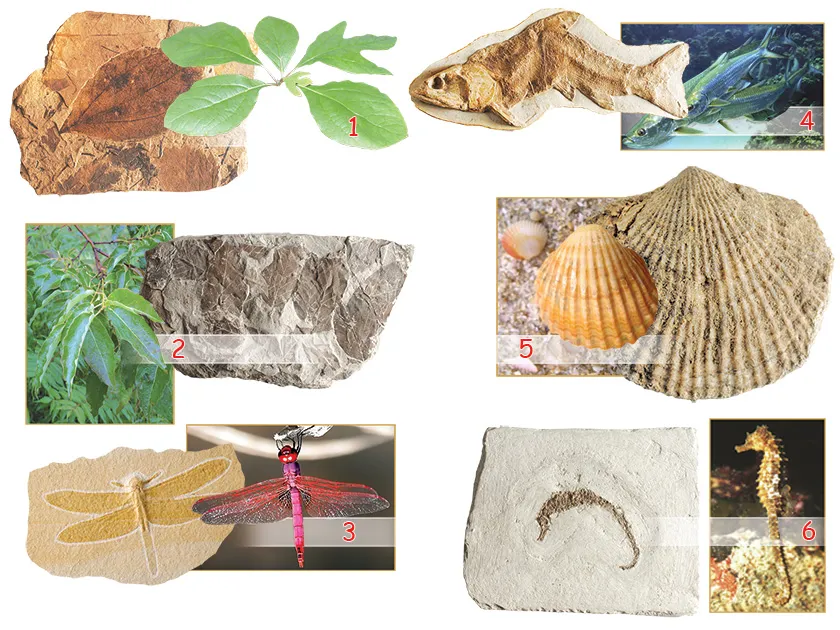
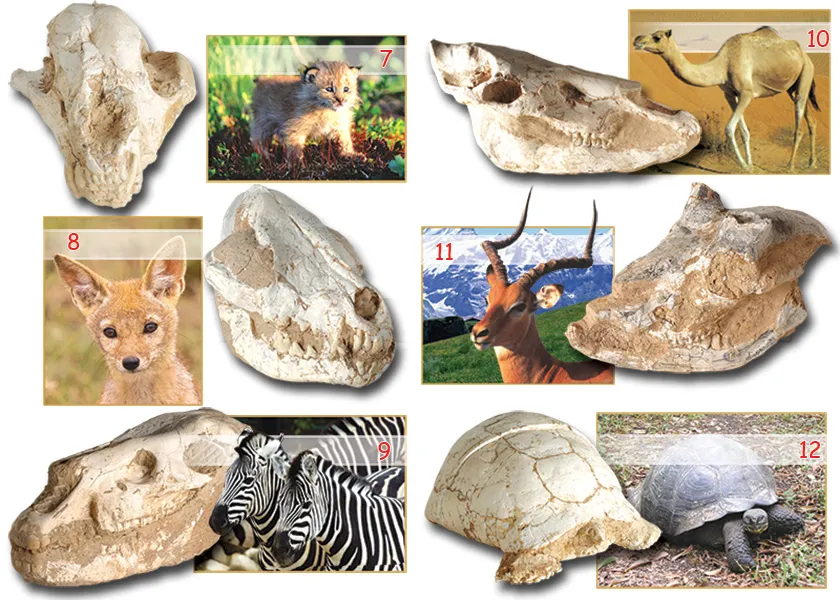
But this is a deception.
The American paleontologist S. M. Stanley describes how the Darwinist dictatorship that dominates the scientific world ignores and conceals this fact revealed by the fossil record:
The known fossil record is not, and never has been, in accord with gradualism. What is remarkable is that, through a variety of historical circumstances, even the history of opposition has been obscured… "The majority of paleontologists felt their evidence simply contradicted Darwin's stress on minute, slow, and cumulative changes leading to species transformation."... [but] their story has been suppressed.54
But no matter how much they try to keep it hushed up, one fact can no longer be concealed: there are millions of living fossils. Darwin's theory of evolution is currently in a state of total ruin in the face of the facts revealed by the fossil record. Scientific findings have demolished Darwinism. Darwinists cannot conceal these fossils that prove the fact of Creation. The facts are out in the open and the collapse of Darwinism has been revealed by the fossil record, once Darwinism's greatest foundation.
The Darwinist ploy has failed. The fossils that Darwinism expected would confirm the theory have actually, by Allah's leave and will, put an end to it. People have thus seen the truth that Allah creates all living things from nothing. Once they have seen this, no contrary claim can have any value or effect. This can be irrefutably seen by one and all. Our Almighty Lord reveals in verses how He has created all things from nothing: