

Reading time: ~2 min read
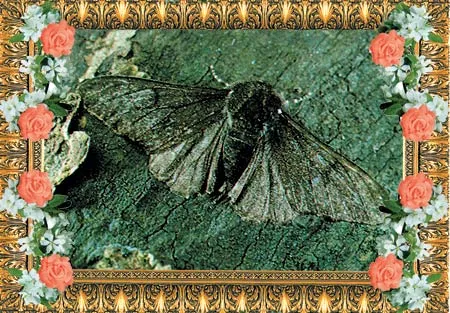
Professor Kettlewell's studies were carried out in the regions of Birmingham and Dorset. In later years, various scientists performed similar studies in other areas. Their results astonished researchers, because the expected data failed to materialize. For example, they expected all the light-colored moths to be eliminated around Manchester, an area exposed to very heavy air pollution. Yet that is not what they found.278 This indicated that there were other factors leading to melanism in moths, beyond Kettlewell's thesis.
Investigations in other regions also failed to match Kettlewell's statements. The Liverpool University biologist Jim Bishop realized that there were more melanics than expected in unpolluted, rural areas of Wales, and concluded that as yet unknown factors were involved.279 Two researchers who had worked alongside Kettlewell, David Lees and Robert Creed, revealed a darker- moth level of 80% in rural parts of eastern England with very little air pollution. These two scientists stated that Kettlewell's studies were not all that reliable:
We conclude therefore that either the predation experiments and tests of conspicuousness to humans are misleading, or some factors or factors in addition to selective predation are responsible for maintaining the high melanic frequencies.280
The zoologist R. C. Steward, who had studied melanism in moths, determined that although melanic moths were well camouflaged in South Wales, they constituted only 20% of the population.281 Steward collected data from 165 separate areas of Britain, concluding that north of 52 degrees latitude, sulfur dioxide (a chemical cause of air pollution), was directly linked to melanism; but that south of 52 degrees latitude, other factors apart from air pollution might be having an effect. He described Kettlewell's error by saying, "it may not be possible to generalize from the results for one area, to explain geographic variation over the rest of Britain."282
As more research was carried out, data opposing Kettlewell's theory accumulated. The idea that birds led to natural selection by hunting moths proved to be a false assumption. In the words of R. J. Berry, one of Kettlewell's colleagues, "It is clear that melanic peppered moth frequencies are determined by much more than differential visual predation by birds."283
Finally, in 1988, Professor Bruce Grant and his colleagues announced the results of their own research aimed at establishing the true cause of melanism in moths, according to which, the declines in melanism "correlated primarily with reductions in atmospheric sulfur dioxide."284
In short, research over the last 20 to 30 years has not confirmed Kettlewell's thesis at all. Moreover, it has become increasingly apparent that there were many errors—and deceptions—in his account.
References
- J.A. Bishop, L.M. Cook, "Industrial melanism and the urban environment," Advances in Ecological Research, Vol. 11, 1980, pp. 373-404; G.S. Mani, "Theoretical models of melanism in Biston betularia," Biological Journal of the Linnean Society, Vol. 39, 1990, pp. 355-371. ↩
- J.A. Bishop, "An experimental study of the cline of industrial melanism in Biston betularia (L.) (Lepidoptera) between urban Liverpool and rural North Wales," Journal of Animal Ecology, Vol. 41, 1972, p. 240. ↩
- D.R. Lees, E.R. Creed, "Industrial melanism in Biston betularia: the role of selective predation," Journal of Animal Ecology, Vol. 44, 1975, pp. 75-76. ↩
- R.C. Steward, "Melanism and selective predation in three species of moths," Journal of Animal Ecology, Vol. 46, 1977, pp. 483-496; R.C. Steward, "Industrial and non-industrial melanism in the peppered moth, Biston betularia," Ecological Entomology, Vol. 2, 1977, pp. 231-243. ↩
- R.C. Steward, "Industrial and non-industrial melanism in the peppered moth, Biston betularia," Ecological Entomology, Vvol. 2, 1977, pp. 239, 242. ↩
- R.J. Berry, "Industrial melanism and peppered moths (Biston betularia)," Biological Journal of the Linnean Society 39, p. 312. ↩
- B.S. Grant, A.D. Cook, C.A. Clarke, and D.F. Owen, "Geographic and temporal variation in the incidence of melanism in peppered moth populations in America and Britain." Heredity, Vol. 89, No. 5. pp. 465-471 ↩