

Reading time: ~1 min read
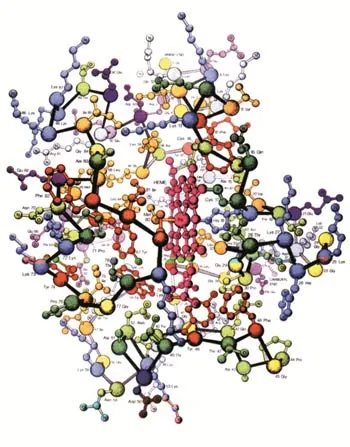
So much for the cell, but evolution fails even to account for the building-blocks of a cell. The formation, under natural conditions, of just one single protein out of the thousands of complex protein molecules making up the cell is impossible.
Proteins are giant molecules consisting of smaller units called amino acids that are arranged in a particular sequence in certain quantities and structures. These units constitute the building blocks of a living protein. The simplest protein is composed of 50 amino acids, but there are some that contain thousands.
The absence, addition, or replacement of a single amino acid in the structure of a protein causes the protein to become a useless molecular heap. Every amino acid has to be in the right place and in the right order. The theory of evolution, which claims that life emerged as a result of chance, is quite helpless in the face of this order, since it is too wondrous to be explained by coincidence. Prof. Fred Hoyle comments as follows:
Indeed, such a theory (that life was assembled by an intelligence) is so obvious that one wonders why it is not widely accepted as being self-evident. The reasons are psychological rather than scientific.242
The reason Hoyle used the term "psychological" is the self-conditioning of evolutionists not to accept that life was created. The rejection of Allah's existence is their main goal. For this reason alone, they go on defending irrational theories which they at the same time acknowledge to be impossible.
References
- Fred Hoyle, Chandra Wickramasinghe, Evolution from Space, Simon & Schuster, New York, 1984, p. 130. (emphasis added) ↩