Reading time: ~9 min read

Have you ever realized how millions of countless living things flawlessly perform tasks that you could never hope to do? The fact is that if these various organisms, great and small, were unable to perform their tasks, neither you nor other living things could exist.
In recent years, studies have been carried out to measure the economic value of some environmental services provided by living things, most of which are beyond price. A team led by Robert Costanza of the University of Maryland in the US, calculated that the Earth provides a minimum of $16-54 trillion dollars worth of "services" to humans per year.145
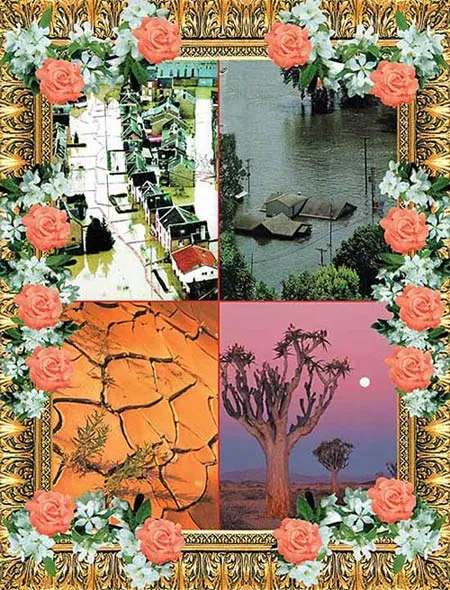
Oxygen Production: Oxygen, one of the elements essential to life, is emitted by green plants and bacteria known as cyanobacteria. The O2 breathed in by human beings, animals and micro-organisms is constantly replenished through the process of photosynthesis carried out by these organisms, and the balance is thus maintained. Every year, green plants release some 500 billion tons of oxygen into the atmosphere.146 Green plants and some single-celled organisms also play a vital role in regulating gasses in the atmosphere and the temperature on Earth. For example, if the level of carbon dioxide in the atmosphere were not regulated by plants, then the Earth's temperature would rise and the ice caps would melt. As a result, some regions would be flooded, and others would become into deserts, endangering thousands of species.
Fertilization of Plants: One of the ecosystem services is the fertilization of plants and flowers. Some 220,000 species of flowering plant need animals for successful fertilization. More than 100,000 different species take part in this process, including bees, butterflies, flies, birds and even bats,147 which carry pollen from flowers' male organs to female ovaries. Many species of plants in forests, meadows, agricultural lands, orchards and other environments depend on these pollen-carriers. If these creatures disappeared, they would go extinct.
Eighty percent of the plant foods consumed by human beings are fertilized by these animals.148 According to recent research, the economic value of flower fertilization by animals is around $200 billion a year.149 A recent drop in the level of fruit production in certain parts of the USA once again revealed just how important pollen-carrying insects are: The disappearance of wild bee species and an increase in the number of honeybees had a negative effect on the fruit harvest.150
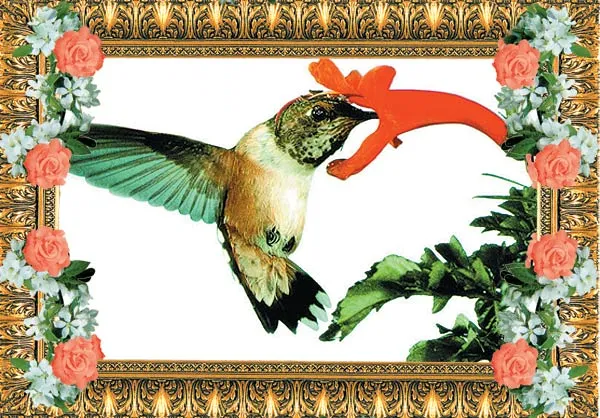
In addition, thousands of animal species also contribute to tree reproduction and the growth of forests by distributing tree seeds. For instance, Pinus albicaulis, a white-barked species of pine tree) reproduces with the help of a bird named Nucifraga columbiana. The seeds of this pine tree lie within a tightly closed cone; the bird propagates new P. albicaulis trees by opening the cone, extracting the seeds and burying them.151 In his book Made for Each Other: A Symbiosis of Birds and Pines, Professor of Forestry Ronald Lanner of Utah State University describes the vital role played by birds in the germination of pines.152
Cleaning Services: What state would your home quickly turn into, if your rubbish were not collected? The same applies to the Earth. If leaves falling from trees, dead animals and plants, rubbish and industrial wastes accumulated, the Earth would become uninhabitable. This is forestalled, however, by the work of ants, termites, mites, fungi, insects, invertebrates and to a large extent, bacteria. Millions of species break down and convert dead organisms and organic wastes into minerals and components that provide foodstuffs for still other organisms. Just like assembly workers in a factory, various bacteria species work in co-operation.
For example, saprophytic bacteria first convert the nitrogen in dead animals or animal wastes into ammonia. Nitrite bacteria then convert the ammonia into nitrites. Thanks to this perfectly functioning system, the environment is cleaned up, organic substances are re-released, and the food needs of living things are met. It is thought that around 130 billion tons (2,600,000,745,162 pounds) of substances are processed and recycled by these living things.153
Forests made up of various species of tree also make a large contribution to cleaning and disinfecting some 50% of the air, filtering and eliminating harmful gasses and polluted water. One hectare of pine forest absorbs 30 to 40 tons (66,000 to 88,000 pounds ) of dust a year, and a hectare of beech forests absorbs 68 tons (150,000 pounds).154
Many living things are involved in purifying the oceans. For example, mussels carry out the very important task of filtering sea water as they feed, like peerless filters. The reason for the murky appearance of North America's Chesapeake Bay lies in the fact that the mussels there have been harvested to excess. It is calculated that until a few decades ago, mussels filtered all of Chesapeake Bay's water every 3 to 5 days.155 Since the bay is 310 kilometers (192 miles) long and 6 to 40 kilometers (3 to 25 miles) wide, the size of the work performed by these shellfish can be better appreciated.
Bacteria and plants also assist human beings by cleaning up toxic wastes. Some members of the mustard family, for example, absorb heavy metals from the soil and store them in their own tissues, thus purifying the soil of toxins. These species are planted to clean up areas with high levels of wastes and toxic metals such as lead, copper, zinc and cobalt. Some species of bacteria assume the role of breaking down substances that lead to soil and water pollution; they can eliminate a number of waste products that endanger the environment and human health. Bacteria species that break down petroleum can be found in just about all types of soil.156 In the wake of an oil spill in Alaska in 1989, micro-organisms were used to help clean up the coast..
The following case will help clarify the economic implications of the sea, land and atmosphere constantly being cleaned by living things. When the quality of water in New York City recently dropped, officials had two alternatives: One was a water-purification plant costing $6 to 8 billion. The other was the natural improvement of the reservoir carrying water to the city and of the water itself, to cost $1 to 1.5 billion. In the light of these findings, the New York authorities decided to improve the reservoir, because their study showed that this would save $6 billion over 10 years.157
Climate Regulation: Trees, plants and forests play a part in balancing the Earth's climate structure. Forests stabilize the humidity level in the air; in summer, they reduce the temperature by 5 to 8.5 degrees Centigrade (41 to 47 degrees Fahrenheit), and in winter they raise it by 1.6 to 2 degrees (34.7 to 35.6 degrees Fahrenheit), thus moderating heat and cold.158
Deforestation has a negative impact on Earth's water circulation and climatic balances. The frequent floods and droughts currently being experienced in certain parts of the world are some of the consequences.
Soil Conservation: Trees and plants prevent surface erosion and protect soil against the erosive affects of rain and wind. Lester R. Brown, Founder of the World Watch Institute, gives a better idea of the importance of erosion-preventing trees and forests:
Although oil is the first major resource whose supply has been restricted enough to measurably constrain economic expansion, over the long term, the loss of topsoil through erosion is likely to be more important. 159

Soil enrichment: The subsoil is full of species that, despite their very small size, perform great tasks and prevent the soil losing productivity. Worms, ants and other animal species mix the soil, aerating and enriching it. The worms in one hectare of land digest up to 10 metric tons of soil a year, and make it more fertile by plowing it up.160
Professor Wilson describes the living species that live in the depths of the soil, most of them unknown to us, but which are nevertheless of the greatest importance:
When you scoop up a double handful of soil almost anywhere except in the barren deserts, you will find thousands of invertebrate animals, ranging in size from clearly visible to microscopic, from ants and springtails to tardigrades and rotifers. The biology of most of the species you hold is unknown: We have only the vaguest idea of what they eat, what eats them, and the details of their life cycle, and probably nothing at all about their biochemistry and genetics. Some of the species might even lack scientific names. We have little concept of how important any of them are to our existence. Their study would certainly teach us new principles of science to the benefit of humanity. Each one is fascinating in its own right.161
What we have cited here represents only a very small part of the services provided by living things. The significance of all this information is clear: We survive thanks to living things that perform tasks more valuable than we can ever imagine. It is God, Lord of the worlds, Who creates all this magnificent variety of life that permits our own survival in flawless harmony.
No doubt, what we obtain from biodiversity are some of the countless blessing created by God for human beings. The size of the blessings He has bestowed is revealed in a verse:
He has given you everything you have asked Him for. If you tried to number God's blessings, you could never count them. Man is indeed wrongdoing, ungrateful. (Surah Ibrahim, 34)