

Reading time: ~6 min read
Many characteristics observed in living things represent enormous quandaries for the theory of evolution. Bees and ants live together in enormous communities and exhibit the finest examples of excellent, disciplined social life. Bees build those architectural marvels called honeycombs. Spiders spin such high-quality webs that technology is barely able to begin replicating them. Even the fiercest animals show devotion to their own young and even to other species. Countless other actions involving reason, judgment and decision-taking-features supposedly unique to human beings-cannot be explained in terms of any of the mechanisms proposed by the theory of evolution.
Evolutionists say that these modes of living, or behavior in living things emerged as the result of "impulses" from inside. However, they are unable to say what those impulses were.
Darwinists admit the fact that an enormous force affects the behavior of living things. They attribute the display of devotion, division of labor and perfect organization among life forms to direction by a force.
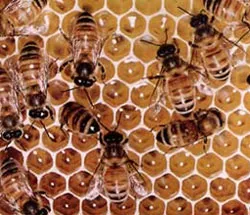
However, they then bring the issue to an end by simply referring to this force as instinct. To describe the origin of that force, they employ the clichéd term "Mother Nature."
In fact, however, no evolutionist to date can say where instincts are located in living things' bodies. In what part of the anatomy do these impulses, described as instincts, lie? In the brain, weighing just a few hundred grams? Or tucked away in some of the proteins and amino acids that make up the tissues?
When we open up the bodies of living things to examine them, we are still unable to establish the source of this information. This is because instinct is an impulse that expresses the spiritual, and has no material counterpart. This shows the serious inconsistency among Darwinists and materialists, who reject the spiritual and maintain that all things are simply accumulations of matter.
In fact, evolutionists have been consistently unable to shed any light on this question. If an animal shows characteristics like altruism, love, cooperation, friendship and loyalty that means that there is a force that leads the way, that shows it what to do and that inspires it to do such things. That power is obviously Allah, the sole Lord and Ruler of the universe.
Given the obvious nature of these facts, evolutionists have been forced to make confessions regarding instinct too. And as in all areas, the clearest admissions come from Darwin.
Charles Darwin:
What shall we say to the instinct which leads the bee to make cells, and which has practically anticipated the discoveries of profound mathematicians? 363
Many instincts are so wonderful that their development will probably appear to the reader a difficulty sufficient to overthrow my whole theory.364
But it would be a serious error to suppose that the greater number of instincts have been acquired by habit in one generation, and then transmitted by inheritance to succeeding generations. It can be clearly shown that the most wonderful instincts with which we are acquainted, namely, those of the hive-bee and of many ants, could not possibly have been acquired by habit.365
If a working ant or other neuter insect had been an animal in the ordinary state, I should have unhesitatingly assumed that all its characters had been slowly acquired through natural selection; namely, by an individual having been born with some slight profitable modification of structure, this being inherited by its offspring, which again varied and were again selected, and so onwards.
But with the working ant we have an insect differing greatly from its parents, yet absolutely sterile; so that it could never have transmitted successively acquired modifications of structure or instinct to its progeny. It may well be asked, how is it possible to reconcile this case with the theory of natural selection?366
I have not attempted to define intelligence; but have quoted your remarks on experience, and have shown how far they apply to worms. It seems to me that they must be said to work with some intelligence, anyhow they are not guided by a blind instinct.367
Finally, it may not be a logical deduction, but to my imagination it is far more satisfactory to look at such instincts as the young cuckoo ejecting its foster-brothers,- ants making slaves, -the larvae of ichneumonidae feeding within the live bodies of caterpillars,--not as specially endowed or created instincts, but as small consequences of one general law, leading to the advancement of all organic beings, namely, multiply, vary, let the strongest live and the weakest die. 368
But the greater number of the more complex instincts appears to have been gained in a wholly different manner, through the natural selection of variations of simpler instinctive actions.
Such variations appear to arise from the same unknown causes acting on the cerebral organization, which induce slight variations or individual differences in other parts of the body; and these variations, owing to our ignorance, are often said to arise spontaneously. We can, I think, come to no other conclusion with respect to the origin of the more complex instincts, when we reflect on the marvelous instincts of sterile worker-ants and bees, which leave no offspring to inherit the effects of experience and of modified habits.369
... it seems to me wholly to rest on the assumption that instincts cannot graduate as finely as structures. I have stated in my volume that it is hardly possible to know which, i.e., whether instinct or structure, change first by insensible steps.370
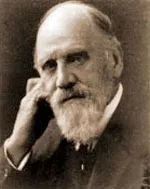
Francis Darwin, son of Charles Darwin:
Chapter III. of the Sketch, which concludes the first part, treats of the variations which occur in the instincts and habits of animals... It seems to have been placed thus early in the Essay to prevent the hasty rejection of the whole theory by a reader to whom the idea of natural selection acting on instincts might seem impossible. This is the more probable, as the Chapter on Instinct in the Origin is specially mentioned (Introduction, page 5) as one of the "most apparent and gravest difficulties on the theory."371
Gordon Rattray Taylor is an evolutionist author and chief science advisor for the BBC:
When we ask ourselves how any instinctive pattern of behavior arose in the first place and became hereditarily fixed, we are given no answer...372
Biologists assume freely that such inheritance of specific behavior patterns is possible, and indeed that it regularly occurs. Thus Dobzhansky roundly asserts: "All bodily structures and functions, without exception, are products of heredity realized in some sequence of environments. So are all forms of behavior, without exception." This simply isn't true and it is lamentable that a man of Dobzhansky's standing should dogmatically assert it.
If in fact behavior is heritable, what are the units of behavior which are passed on-for presumably there are units? No one has suggested an answer.373
The manifest fact is that the genetic mechanism exhibits not the smallest indication of being able to transmit specific forms of behavior from one generation to another. The genetic mechanism just produces protein. It may affect behavior in general by producing greater amounts of certain hormones; it may make an animal more aggressive or passive, for instance, or more dependent on its mother. But there is no evidence that it can transmit a specific form of behavior, such as the string of actions required to build a nest, from one generation to another. If behavior really is inherited, then what is the unit of behavior transmitted from one generation to another? These are assumed; nobody has been able to answer this question.