

Reading time: ~4 min read
Mathematics has now proven that chance plays no role in the formation of the data encoded in DNA. The word "impossible" fails to do justice to the probability of just one of the 30,000 genes making up DNA forming by chance, let alone a DNA molecule consisting of billions of components.
The evolutionist Richard Dawkins describes the complexity within the cell thus:
Physics books may be complicated, but... the objects and phenomena that a physics book describes are simpler than a single cell in the body of its author. And the author consists of trillions of those cells ... organised with intricate architecture and precision-engineering into a working machine capable of writing a book. ... Each nucleus ... contains a digitally-coded database larger, in information content, than all 30 volumes of the Encyclopedia Britannica put together. And this figure is for each cell.140
Dr. Francis Collins, one of the world’s most important experts on genetics and the scientist who deciphered the DNA code, has announced his belief in Allah. Following his great discovery, Collins wrote a book describing his faith in Allah. Every rational person of good conscience will appreciate that unconscious atoms could never spontaneously give rise to the extraordinary system in DNA.
Francis Collins:
I felt the presence of God while working in the laboratory. There is definitely a force greater than ourselves, and I believe in that. Deciphering DNA drew me a little closer to God.141
Some evolutionists admit that such is the case:
Carly P. Haskins is an evolutionist biologist. The following is excerpted from an article published in American Scientist magazine:
But the most sweeping evolutionary questions at the level of biochemical genetics are still unanswered. How the genetic code first appeared and then evolved and, earlier even than that, how life itself originated on Earth remain for the future to resolve... Did the code and the means of translating it appear simultaneously in evolution? It seems almost incredible that any such coincidence could have occurred, given the extraordinary complexities of both sides and the requirement that they be coordinated accurately for survival. By a pre-Darwinian (or a skeptic of evolution after Darwin) this puzzle would surely have been interpreted as the most powerful sort of evidence for special creation.142
Leslie E. Orgel is a senior fellow and researcher professor at the Salk Institute for Biological Sciences in San Diego:
We do not understand even the general features of the origin of the genetic code... [It] is the most baffling aspect of the problem of the origins of life and a major conceptual or experimental breakthrough may be needed before we can make any substantial progress.143
Paul Auger is an evolutionist and French scientist:
It is extremely improbable that proteins and nucleic acids, both of which are structurally complex, arose spontaneously in the same place at the same time. Yet it also seems impossible to have one without the other. And so, at first glance, one might have to conclude that life could never, in fact, have originated by chemical means.144
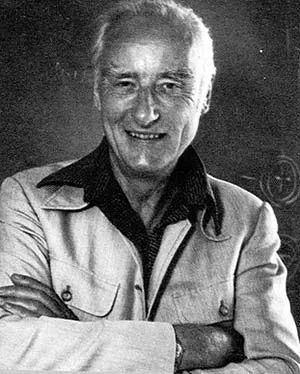
Douglas R. Hofstadter, Pulitzer Prize winner and professor of cognitive science and computer science at Indiana University:
How a single egg cell divides to form so numerous differentiated cells, and the perfect natural communication and the cooperation between these cells top the events that amaze scientists.145
Francis Crick is the Nobel Prize-winning evolutionist geneticist who, together with James Watson, discovered DNA:
An honest man, armed with all the knowledge available to us now, could only state that, in some sense, the origin of life appears at the moment to be almost a miracle.146
John Maddox is the former editor of Nature magazine:
It is disappointing that the origin of the genetic code is still as obscure as the origin of life itself.147
Pierre Grassé is the renowned French evolutionist and zoologist:
Any living being possesses an enormous amount of "intelligence," very much more than is necessary to build the most magnificent of cathedrals. Today, this "intelligence" is called information, but it is still the same thing. It is not programmed as in a computer, but rather it is condensed on a molecular scale in the chromosomal DNA or in that of every other organelle in each cell. This "intelligence" is the sine qua non of life. Where does it come from? . . This is a problem that concerns both biologists and philosophers, and, at present, science seems incapable of solving it.148