

Reading time: ~6 min read
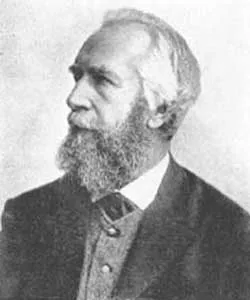
The theory of eugenics, which emerged in the first half of the 20th century, meant the weeding out of sick and handicapped people and the "improving" of the human race by increasing the number of healthy individuals. According to this perverted theory, in the same way that better kinds of animals can be produced by mating healthy animals with each other, so the human race could be improved in the same way.
As might be expected, those who put forward the eugenics programme were Darwinists. At the head of the eugenics wave in England came Charles Darwin's cousin, Francis Galton, and his son Leonard Darwin.
It was clear that the idea of eugenics was a natural result of Darwinism. In fact, this truth was awarded special importance in those publications which supported eugenics, "Eugenics is man's taking charge of his own evolution," it was said.
Kenneth Ludmerer, a medical historian at Washington University, noted that the idea of eugenics is as old as Plato's Republic but he also added that Darwinism was the reason for the rise in interest in the idea in the 19th century:
… modern eugenics thought arose only in the nineteenth century. The emergence of interest in eugenics during that century had multiple roots. The most important was the theory of evolution, for Francis Galton's ideas on eugenics–and it was he who created the term "eugenics"–were a direct logical outgrowth of the scientific doctrine elaborated by his cousin, Charles Darwin.47
In Germany the first person to be influenced by and to spread eugenics was the famous evolutionary biologist Ernst Haeckel. Haeckel was a close friend and supporter of Darwin. To support the theory of evolution, he put forward the claim "recapitulation," which proposed that the embryos of different living creatures resembled one another. It later emerged that Haeckel had falsified the data when putting forward this claim.
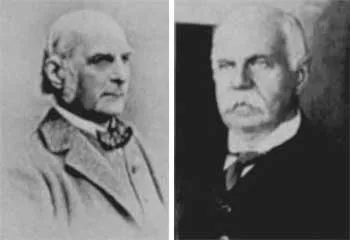
While Haeckel was on the one hand making scientific forgeries of this kind, on the other he was putting forward eugenic propaganda. He suggested that newly-born handicapped children should be killed forthwith and that this would speed up the evolution of society. He went even further, claiming that lepers and people with cancer and mental illnesses should be painlessly killed, or else these people would be a burden on society and would slow down evolution.
The American researcher George Stein summed up Haeckel's blind allegiance to the theory of evolution in an article of his in the magazine American Scientist in this way:
… [Haeckel] argued that Darwin was correct … humankind had unquestionably evolved from the animal kingdom. Thus, and here the fatal step was taken in Haeckel's first major exposition of Darwinism in Germany, humankind's social and political existence is governed by the laws of evolution, natural selection, and biology, as clearly shown by Darwin. To argue otherwise was backward superstition.48
Haeckel died in 1919. But his ideas were inherited by the Nazis. Shortly after Hitler came to power an official eugenics programme was initiated. In his book Man’s Origin, Man’s Destiny, the famous professor of chemistry A.E. Wilder-Smith cited Hitler’s own words describing this new policy:
In the popular state, the education of the mind and the body will play an important role, but human selection is just as important. …The state has the responsibility of declaring as unfit for reproductive purposes anyone who is obviously ill or genetically unsound. … and must carry through with this responsibility ruthlessly without respect to understanding or lack of understanding on the part of anyone. …Stopping reproduction of the bodily degenerate or psychically ill for a period of only 600 years would lead …to an improvement in human health which can hardly be envisaged today. If the fertility of the healthiest members of the race were realized and planned the result would be a race which … would have lost the seeds of bodily and spiritual decay which we now carry. 49
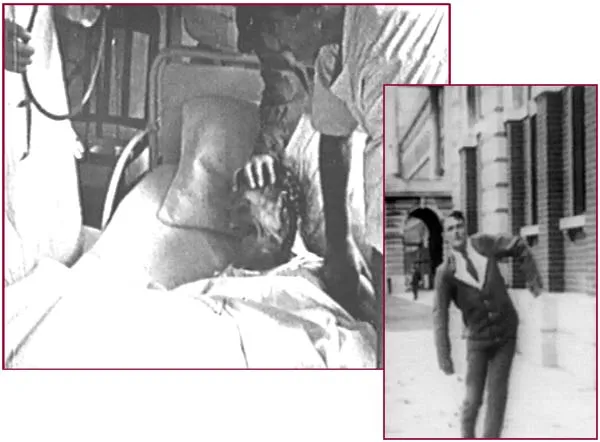
As a necessity of this policy of Hitler's, the mentally ill, the disabled, the blind from birth, and those with genetic diseases in German society, were rounded up in special "sterilisation centres." These people were regarded as parasites harmful to the purity and evolutionary progress of the German race. A while later in fact, these people who were removed from society began to be killed by secret order of Hitler.
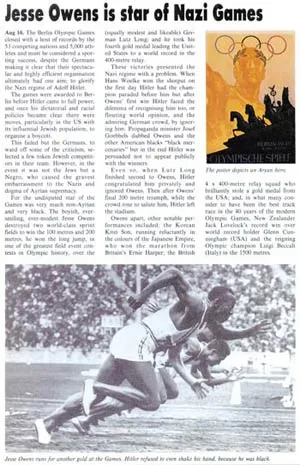
These murders were presented as perfectly reasonable and those who were accepted as genetically inferior were described as "unprofitable" and obstacle to the development of the nation. Groups, including various races and peoples, which were seen as inferior races slowly began to be included. Later again sick elderly people, those with jaundice, those with serious mental defects, the deaf and dumb, and even those with fatal diseases were included. After the black athlete Jesse Owens won four gold medals at the 1936 Berlin Olympics, Hitler, even though he congratulated all the competitors, refused to congratulate Jesse Owens and left the stadium. Some evolutionists even advocated the view that women were evolutionarily inferior to men. Dr Robert Wartenberg, later a prominent neurology professor in California, tried to prove women's inferiority by arguing that they could not survive unless they were ‘protected by men'. He concluded that because the weaker women were not eliminated as rapidly due to this protection, a slower rate of evolution resulted and for this reason natural selection was less operative on women than men. Based on these thoughts, women in Nazi Germany were openly prohibited from entering certain professions.50
Following the development of Darwinism and the idea of eugenics, In Germany, "racial scientists" openly advocated the killing of unwanted members and segments of the population. One of these scientists, Adolf Jost, "issued an early call for direct medical killing in a book published in 1895, Das Recht auf den Tod (The Right to Death). Jost argued that "for the sake of the health of the social organism, the state must take responsibility for the death of individuals." Adolf Jost was a mentor to Adolf Hitler, who showed himself on the political stage nearly 30 years later. "The state must see to it that only the healthy beget children," Hitler said. "It must declare unfit for propagation all who are in any way visibly sick or who have inherited a disease and can therefore pass it on."51
Under a law passed in 1933, 350,000 mentally ill people, 30,000 gypsies, and hundreds of black children were sterilised by such methods as castration, x-rays, injection, and electric shocks to the genital area. One Nazi officer said, "National Socialism is nothing but applied biology."52
As well as attempting to hasten the development of the German race by the murder of and ruthless policies directed at innocent people, Hitler was also implementing another condition of eugenics. Blond, blue-eyed men and women, accepted as representative of the German race, were encouraged to form relationships and have children. In 1935 special reproduction farms were established for this purpose. These farms, where young girls conforming to racist criteria were installed, were frequently visited by SS units. The illegitimate children born on these farms were to be raised as the soldiers of the intended 1,000-year German kingdom.