

Reading time: ~4 min read
In the earlier chapters of this book we saw that racism was a part of pagan culture, and that although it had already largely been done away with through the revelation of divine religion, it returned to Europe in the 18th and 19th centuries. The greatest influence behind this new development was the replacement of the Christian belief that "God created all people equal" with "Darwinism". By suggesting that man had evolved from more primitive creatures, and that some races had evolved further than others, Darwinism provided racism with a scientific mask.
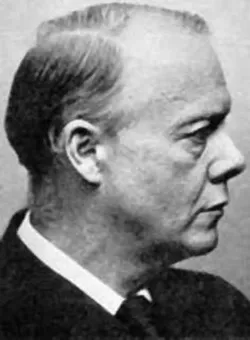
In short, Darwin is the father of modern racism. His theory was taken up and commented on by such "official" founders of modern race theory as Arthur Gobineau and Houston Stewart Chamberlain, and this racist ideology that emerged was then put into practice by the Nazis and other fascists. James Joll, who spent many years as a professor of history at universities such as Oxford, Stanford, and Harvard, explained the relationship between Darwinism and racism in his book Europe Since 1870, which is still taught as a textbook in universities:
Charles Darwin, the English naturalist whose books On the Origin of Species, published in 1859, and The Descent of Man, which followed in 1871, launched controversies which affected many branches of European thought… The ideas of Darwin, and of some of his contemporaries such as the English philosopher Herbert Spencer, …were rapidly applied to questions far removed from the immediate scientific ones… The element of Darwinism which appeared most applicable to the development of society was the belief that the excess of population over the means of support necessitated a constant struggle for survival in which it was the strongest or the 'fittest' who won. From this it was easy for some social thinkers to give a moral content to the notion of the fittest, so that the species or races which did survive were those morally entitled to do so.
The doctrine of natural selection could, therefore, very easily become associated with another train of thought developed by the French writer, Count Joseph-Arthur Gobineau, who published an Essay on the Inequality of Human Races in 1853. Gobineau insisted that the most important factor in development was race; and that those races which remained superior were those which kept their racial purity intact. Of these, according to Gobineau, it was the Aryan race which had survived best… It was... Houston Stewart Chamberlain who contributed to carrying some of these ideas a stage further… Hitler himself admired the author [Chamberlain] sufficiently to visit him on his deathbed in 1927.80
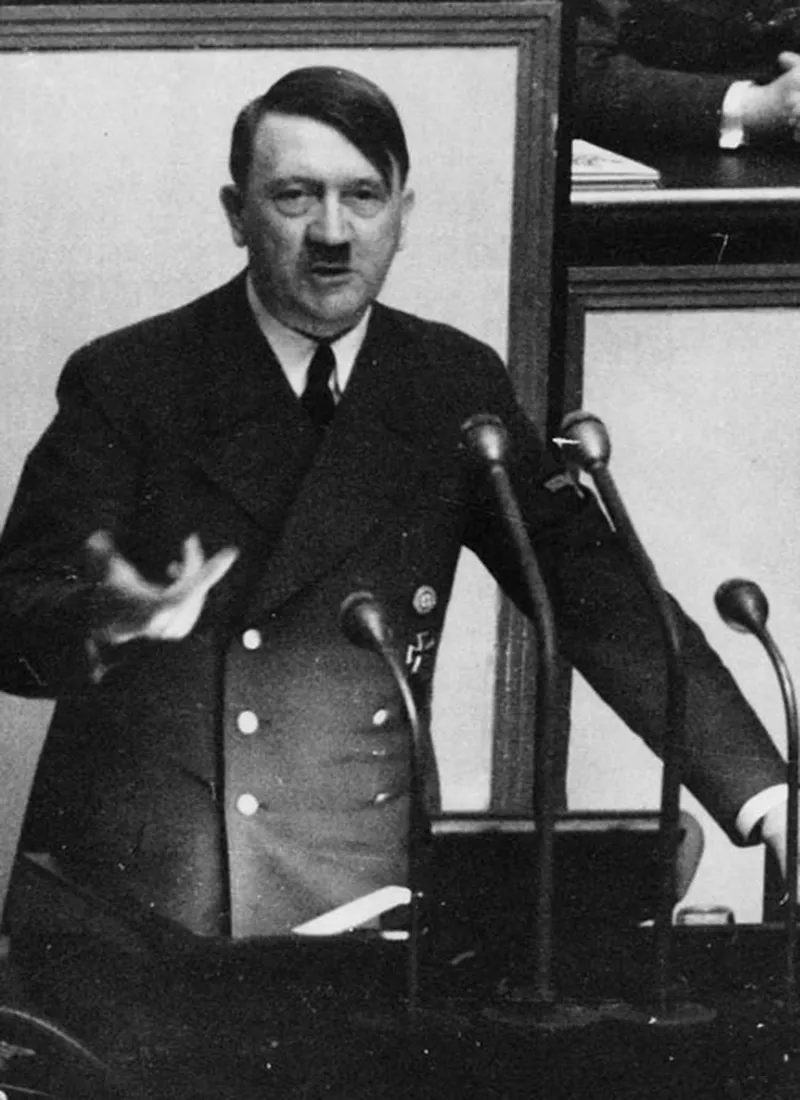
Earlier chapters of this book described how the evolutionist German biologist Ernst Haeckel was one of the most important of Nazism's spiritual fathers. Haeckel brought Darwin's theory to Germany, and formulated it as a program ready for the Nazis. From racists such as Arthur Gobineau and Houston Stewart Chamberlain, Hitler adopted a politically-oriented racism, and a biological approach from Haeckel. Careful examination will reveal that these racists all derived their inspiration from Darwinism.
Indeed, a deep Darwinian influence can be found among all Nazi ideologues. When we examine the Nazi theory, which was given form by Hitler and Alfred Rosenberg, we see in it concepts such as "natural selection," "selective mating," and "the struggle for survival between the races," all repeated dozens of times in Darwin's The Origin of Species. As also mentioned earlier, the name of Hitler's book Mein Kampf was inspired by Darwin's principle that life was a constant struggle for survival, and those who emerged victorious survived. In the book, Hitler talked of the struggle between the races, and maintained that "History would culminate in a new millennial empire of unparalleled splendor, based on a new racial hierarchy ordained by nature herself."81
In the Nuremberg party rally in 1933, he proclaimed that ''higher race subjects to itself a lower race …a right which we see in nature and which can be regarded as the sole conceivable right."82
That Nazism was influenced by Darwinism is accepted by almost all historians who are expert in the period. Peter Chrisp expresses it this way in his The Rise of Fascism:
Charles Darwin's theory that humans had evolved from apes was ridiculed when it was first published, but was later widely accepted. The Nazis distorted Darwin's theories, using them to justify warfare and racism.83
The historian R. Hickman expresses the influence of Darwinism on Hitler in these words:
[Hitler] was a firm believer and preacher of evolution. Whatever the deeper, profound, complexities of his psychosis, it is certain that [the concept of struggle was important because]… his book, Mein Kampf, clearly set forth a number of evolutionary ideas, particularly those emphasizing struggle, survival of the fittest and the extermination of the weak to produce a better society.84