

Reading time: ~1 min read
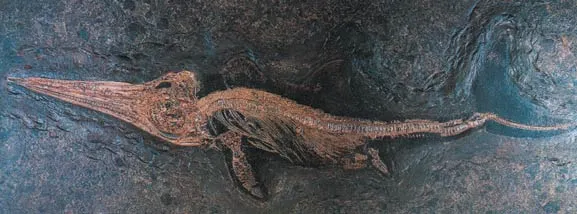
The great majority of marine reptiles are now extinct, though turtles still survive as representatives of this group. The origin of these creatures cannot be explained through any evolutionist approach. The most significant known marine reptile is Ichthyosaurus. Edwin Colbert and Michael Morales admit that there can be no evolutionary explanation for these creatures’ origin:
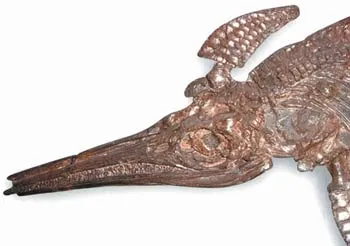
The Ichthyosaurs, in many respects the most highly specialized of the marine reptiles, appeared in early Triassic times. Their advent into the geologic history of the reptiles was sudden and dramatic; there are no clues in pre-Triassic sediments as to the possible ancestors of the Ichthyosaurs . . . The basic problem of Ichthyosaur relationships is that no conclusive evidence can be found for linking these reptiles with any other reptilian order. 125
Alfred Romer, another expert on vertebrate history, writes:
No earlier forms [of ichthyosaurs] are known. The peculiarities of ichthyosaur structure would seemingly require a long time for their development and hence a very early origin for the group, but there are no known Permian reptiles antecedent to them. 126
In short, all the different marine reptiles appeared on Earth separately, with no evolutionary relationship among them. This constitutes manifest scientific proof that all living things are created.