

Reading time: ~3 min read
The theory of evolution, first proposed under the primitive conditions of the 19th century, has been disproved by advances in science and technology. It has been recognized that Darwin's claims are totally unrealistic: Natural selection and mutations, cited as the mechanisms that drive the process of evolution, have no effects of the kind envisaged by Darwinists. In short, it is impossible for them to give rise to new species.
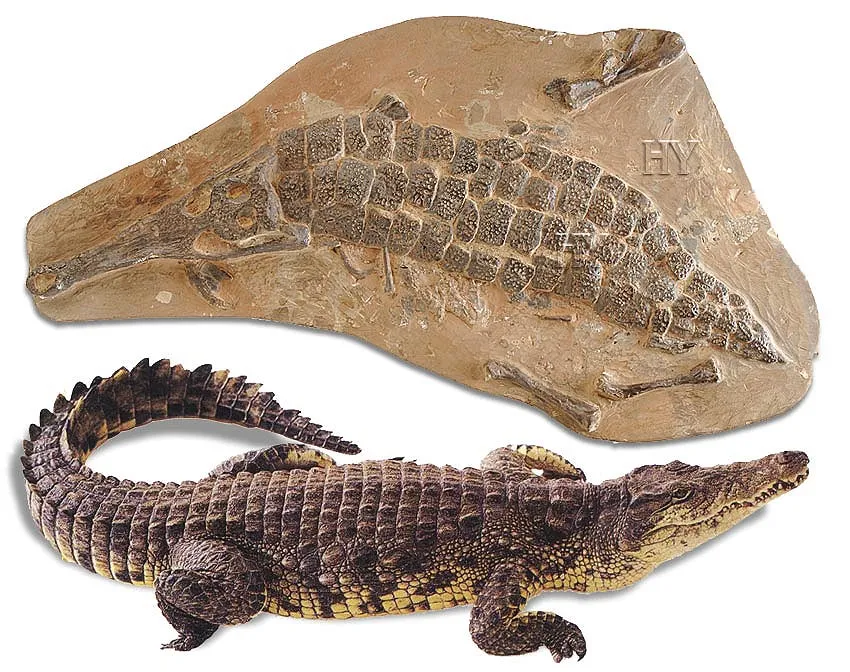
The final death blow to Darwinism was dealt by the fossil record. Darwin claimed that all the millions of different life forms had come into being through descent from a supposed single common ancestor. In order for his claim to be verified, there should be traces in the fossil record—an irrefutable document of natural history—of this supposed primitive ancestor and of the various life forms that developed from it. For example, if all mammals were descended from reptiles, as evolutionists maintain, then there would have to be fossil remains of a series of half-mammalian, half-reptilian life forms. To date, millions of fossils, belonging to a great many species, have been unearthed during excavations. Yet not a single one showing a transition between species has ever been found. Every fossil ever found shows that each living thing emerged suddenly, with all its characteristics complete. In other words, every species of plant and animal was created.
Confronted by this fact, evolutionists have resorted to various falsehoods. They have produced hoaxes—counterfeit, artificial fossils that have come to be regarded as disgraces to paleontology. They have tried to deceive the lay public by tampering with genuine fossils of extinct life forms and inventing a series of imaginary scenarios.
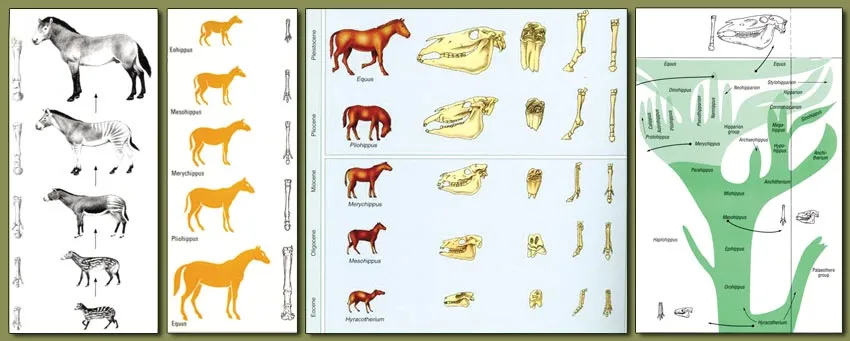
One of the best known of them is the so-called "evolution of the horse." Fossils belonging to entirely different species that once lived in India, South America, North America and Europe were arranged in order of size—from small to large—in the light of evolutionist imaginations. So far, different researchers have come up with more than 20 different equine evolution scenarios.
There is no agreement among them regarding all these completely different family trees. The one point they commonly agree upon is their belief that a dog-like creature known as Eohippus (or Hyracotherium) that lived in the Eocene epoch (54 to 37 million years ago) was the very first ancestor of today's horses. However, Eohippus—portrayed as the ancestor of the horse and that became extinct millions of years ago—is almost identical to the present-day animal known as the hyrax, which looks nothing like a horse and is totally unrelated to that species.19
Moreover, it has been established that breeds of horse living today have also been discovered in the same rock strata as Eohippus.20 This means that the horse and its supposed ancestor were both living at the same time, which proves that the horse never underwent any such process as evolution.
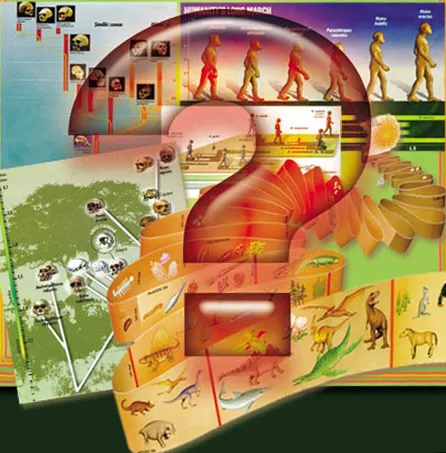
The invalidity of the "equine series" proposed by evolutionists also applies to birds, fish, reptiles and mammals, in short, to all living things, to their supposedly common ancestors and supposed family trees. It has been determined that every fossil species suggested as being the ancestor of some other living thing either belongs to an independent extinct life form or is the result of evolutionists tampering with fossils of the species in question.